 TradeWinGuide
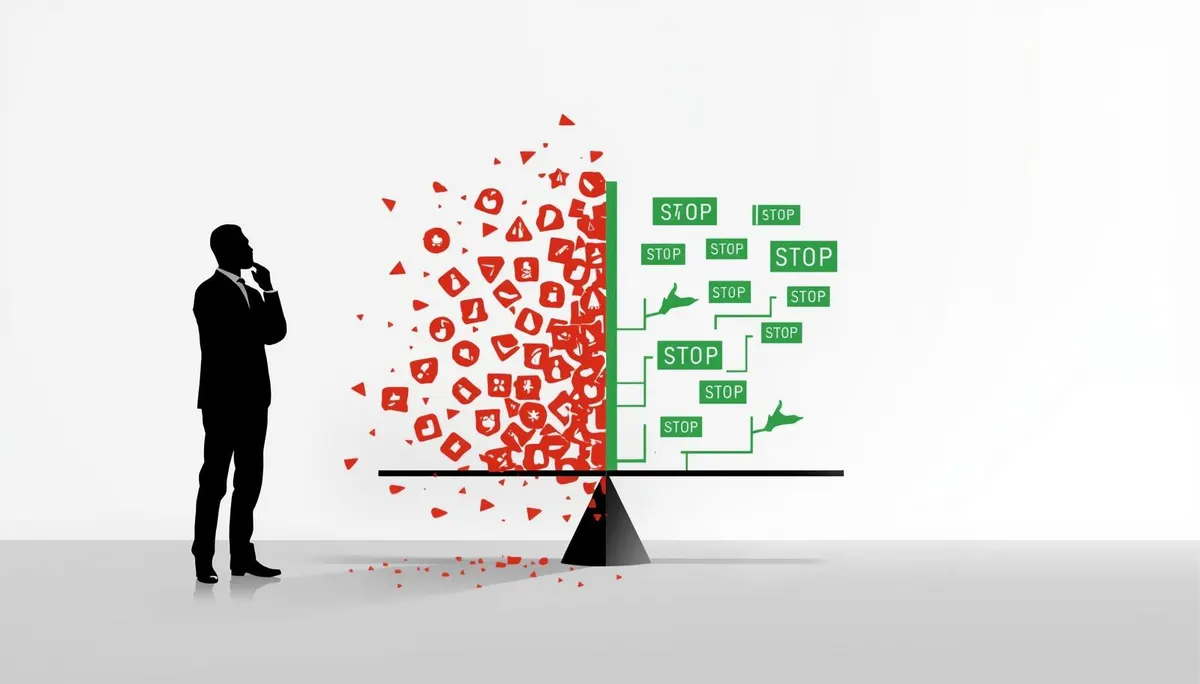
Scalping is a game of speed, precision, and discipline. But most blow-ups don’t come from the strategy—they come from the extra trades taken when there’s no real edge. This Overtrading in Scalping Explained guide will show you how to spot it, quantify the damage, and install simple rules that stop it without killing your opportunity.
Key Takeaways (Save This)
Overtrading in scalping is taking excessive or low-quality trades outside a defined edge to chase action or recover losses.
Trade frequency increases transaction costs and slippage, which can turn a marginally profitable scalping strategy into a losing one.
A+ setup criteria reduce overtrading by restricting entries to a small set of repeatable conditions with clear invalidation.
Daily limits such as max trades, max red trades in a row, and a hard daily loss limit prevent emotional decision loops.
A structured cooldown rule (time-based or loss-based) interrupts revenge trading and restores decision quality.
A trading journal with “setup quality score” + rule-violation tags makes overtrading measurable and correctable.
What is Overtrading in Scalping?
Overtrading in scalping is placing more trades than your proven setup criteria justify, typically driven by emotion or boredom rather than edge.
Importantly, active trading is not the same thing as overtrading. Active trading follows a defined playbook; overtrading breaks it. For example, taking 8 trades that all meet your checklist is active, while taking 25 “maybe” trades after one loss is overtrading.
Next, overtrading looks specific in scalping because the timeframes are fast and the feedback loop is brutal. A one-minute chart can generate endless “almost signals.” For example, you might see three quick candles and convince yourself momentum is real, then get chopped by mean reversion.
Why Overtrading in Scalping Matters
Overtrading matters because it increases costs and decision errors while lowering your expectancy.
First, scalping has more transactions, which means spread + commissions + slippage hit you more often. For example, even a $1–$3 average cost per round trip becomes huge when you take 40 trades.
Next, overtrading amplifies psychological noise. After a few rapid losses, your brain starts protecting ego instead of capital. For example, you stop waiting for pullbacks and start buying breakouts late just to “get it back.”
Finally, scalping already demands precision, so small mistakes become fatal. In scalping, overtrading usually shows up as rule-breaking entries, reduced selectivity, and increasing trade frequency after losses. For example, your first five trades are clean, then the next ten are taken outside your hours, outside trend, and without a stop.
Statistic: Over 80% of retail CFD accounts lose money — Source: ESMA, 2023.
Statistic: A majority of U.S. households that trade frequently underperform; the most active traders historically lagged by several percentage points annually — Source: Barber & Odean, 2000.
Statistic: In 2024, the SEC continued to warn that frequent trading can increase costs and harm returns through commissions/spreads and poor timing — Source: SEC Investor Publications, 2024.
Why Scalpers Overtrade (Root Causes)
Scalpers overtrade because fast feedback, high stimulation, and short setups increase emotional decision-making.
First, the speed of scalping creates a false sense that you must always be in a trade. For example, you miss one move and immediately hunt a lower-quality entry to “catch the next one.”
FOMO: “If I don’t take it, I’ll miss it”
FOMO is the urge to trade to avoid regret, not to follow your edge.
Then, you start chasing candles instead of structure. For example, you buy the top of a spike because Twitter, Discord, or price action “looks strong.”
Revenge trading: “I’m getting it back right now”
Revenge trading is entering new positions to erase emotional discomfort from a loss, not because your setup triggered.
Next, your risk per trade often creeps up. For example, you double size after two losses, even though your plan says fixed risk.
Boredom trading: “Nothing is happening”
Boredom trading is forcing trades during low-volatility periods to feel productive.
Then, you start interpreting random noise as signals. For example, you scalp mid-range inside chop because “price has to go somewhere.”
“Making back fees” and low-quality signals
Fee-chasing is increasing frequency to offset costs, which usually increases costs even more.
Next, you unconsciously lower standards because you want action. For example, you take a “B- setup” that lacks confluence, and it loses like a coin flip.
The Hidden Math: How Overtrading Destroys Your Edge
Overtrading destroys edge by compounding transaction costs and lowering trade quality, which reduces net expectancy.
Most scalping edges are thin. That means costs can flip your system negative. For example, a strategy that makes 0.15R per trade before costs can become -0.05R after costs if you overtrade.
Trade expectancy involves average win, average loss, and win rate; overtrading lowers expectancy when additional trades have weaker quality and higher costs.
Then, the “extra trades” tend to have lower win rate and worse R:R. For example, your A+ setups win 58% at 1:1, while your impulse trades win 45% at 0.8:1.
Simple expectancy example (copy this into your journal)
Expectancy is your average profit per trade after costs.
Now, assume two buckets:
BucketTradesWin rateAvg winAvg lossCost/tradeNet expectancyA+ setups1058%+1.0R-1.0R0.10R(0.58-0.42) -0.10 = +0.06RImpulse trades2045%+0.8R-1.0R0.12R(0.45×0.8 -0.55×1) -0.12 = -0.31R
Next, your day looks “busy,” but your P&L collapses. Those 20 impulse trades are the entire problem. For example, even if your A+ bucket is profitable, the impulse bucket can wipe it out.
Costs that compound in scalping
Transaction costs in scalping include spread, commissions, and slippage, and they compound as trade count increases—making ‘more trades’ a direct drag on net profitability.
Also, costs tend to worsen when you trade at the wrong times. For example, spreads often widen during news or illiquid hours, and your “normal” cost assumptions break.
Statistic: Average equity mutual fund/ETF expense ratios have declined over time, highlighting how even small costs matter — Source: Investment Company Institute (ICI), 2024.
Statistic: U.S. SEC guidance continues to emphasize that higher turnover can raise costs and taxes, reducing net performance — Source: SEC, 2024.
Statistic: Major brokers and venues report that execution quality varies with volatility and liquidity, affecting realized slippage — Source: Cboe Global Markets execution quality resources, 2024.
Prevention System: Rules to Stop Overtrading (Anti-Overtrading Playbook)
A prevention system is a rules-based set of constraints that limits trades to your highest-quality conditions and blocks emotional loops.
First, you need a plan that answers “when I trade” and “when I stop.” For example, if you only trade London open for 90 minutes, you remove half your impulsive opportunities.
Rule 1: Define your A+ setup criteria (non-negotiable)
A+ criteria are the minimum conditions that must be true before you are allowed to enter.
Next, keep it short so you actually use it. For example, require trend alignment + level + trigger candle + invalidation point.
A+ Scalping Setup Checklist (template)
Market condition: Trend or range identified (not guessed).
Location: At a pre-marked level (VWAP / prior high-low / session open).
Confluence: At least 2 confirmations (e.g., structure + volume shift).
Trigger: A defined entry signal (break/retest, rejection, micro pullback).
Risk: Stop placement is obvious and ≤ your max risk.
Invalidation: You can state what proves you wrong in one sentence.
Then, score it before you click: Setup Quality Score (1–5). For example, only trade 4–5 scores for a full week to reset selectivity.
Rule 2: Session limits (time box + trade cap)
Session limits are hard constraints that cap exposure to randomness and fatigue.
Now, use two caps:
Only trade these hours: e.g., 9:30–11:00 ET (stocks) or London open (FX).
Max trades per session: start with 6–12 depending on your tested edge.
Next, answer the common question directly: How many trades per day is “too many” for a scalper?
Practically, it’s “too many” when your rule-violation rate rises or your average setup score drops. For example, if trades 1–6 are clean and trades 7–18 are messy, your cap is probably 6.
Rule 3: Cooldown after losses (stop the spiral)
A cooldown rule is a mandatory pause that interrupts revenge trading and restores decision quality.
Also, make it objective so you can’t negotiate with it. For example:
After 2 consecutive losses: 15-minute break + re-mark levels
After 3 losses in a session: end session, journal, screenshot charts
A practical anti-overtrading rule is a hard cap on trades per session paired with a cooldown after two consecutive losses.
Then, your best trades return because your mind calms down. For example, you stop trying to win back the last trade and start waiting for the next A+ location.
Rule 4: Daily loss limit (hard stop)
A daily loss limit is a predefined max drawdown that ends trading to protect your month.
Next, set it in R, not dollars, to keep it consistent. For example, stop at -3R or -4R daily.
Execution Tools & Practical Templates (Make Discipline Automatic)
Execution tools are platform settings, checklists, and journaling metrics that reduce decisions under stress.
First, your goal is to remove “willpower” from the process. For example, if your platform blocks trading after -3R, you can’t tilt-trade.
Platform tools that prevent overtrading (by category)
Platform safeguards are features that limit order frequency, reduce misclicks, and enforce risk controls.
ToolWhat it doesOvertrading problem it solvesRisk presets (fixed $/R)Auto-calculates sizeOversizing after lossesMax daily loss lockoutDisables trading after limitRevenge spiralsOne-cancels-other (OCO)Brackets entries/stops“No-stop” impulse tradesAlerts at levelsNotifies when price reaches A+ zoneBoredom trades mid-rangeHotkey guardrailsPrevents accidental double entriesSpeed mistakes
Journal metrics that expose overtrading (copy/paste template)
Overtrading becomes fixable when you measure frequency, quality, and rule violations.
Next, track these five fields for every trade:
Setup Quality Score (1–5)
Tag: A+ / A / B / Impulse
Rule broken? (Y/N + which rule)
Time of day: session window or “off-hours”
Reason for entry: plan-based or emotion-based
Then, review weekly with one simple ratio: Impulse Trades % = impulse trades / total trades. For example, if you’re at 35%, your goal is 15% next week.
What’s Next: 7-Day Anti-Overtrading Reset Plan
A 7-day reset plan is a short, rule-driven sprint that reduces trade count while rebuilding selectivity and confidence.
First, treat it like rehab for your process. For example, you’re not trying to “make money” this week—you’re trying to follow rules.
Day-by-day plan (15–30 minutes/day)
Day 1 is defining your A+ setup in writing.
Next, write a one-page checklist and mark three A+ zones on your chart. Prompt: “What must be true for me to enter?”
Day 2 is setting hard limits in your platform.
Then, set max trades, daily loss limit, and bracket orders. Prompt: “Which setting stops me when I’m tilted?”
Day 3 is trading only one session window.
Next, trade only your best 60–120 minutes. Prompt: “Did I trade outside hours, and why?”
Day 4 is enforcing the cooldown rule.
Then, stop after 2 consecutive losses, no exceptions. Prompt: “What emotion showed up before the third trade?”
Day 5 is reducing to A+ trades only.
Next, take only Setup Score 4–5. Prompt: “What did I skip, and did skipping help?”
Day 6 is reviewing screenshots + tagging rule breaks.
Then, find your top two violation patterns. Prompt: “What rule break costs me the most R?”
Day 7 is creating next week’s “guardrails.”
Next, lock in trade cap and refine checklist wording. Prompt: “What single rule gave me the biggest improvement?”
Conclusion
Overtrading in scalping is the habit of taking too many low-quality trades outside your proven edge, usually under emotional pressure.
Next, when you cap frequency, enforce cooldowns, and trade only A+ criteria, your costs drop and your decisions improve. Ultimately, your goal isn’t more trades—it’s better trades, repeated with calm consistency.
Diagnose Your #1 Trading Mistake — Free
Answer 10 diagnostic questions and instantly find out which trading mistake is costing you the most — with a personalised 3-page correction plan PDF.
- Identifies your primary trading mistake
- Personalised 4-step correction plan
- 3-page PDF emailed to you free
What you'll discover:
-
Revenge Trading
Are you chasing losses?
-
Overtrading
Too many trades per day?
-
Emotional Trading
Feelings overriding logic?
Free. No sign-up required. PDF sent to your email.