 TradeWinGuide
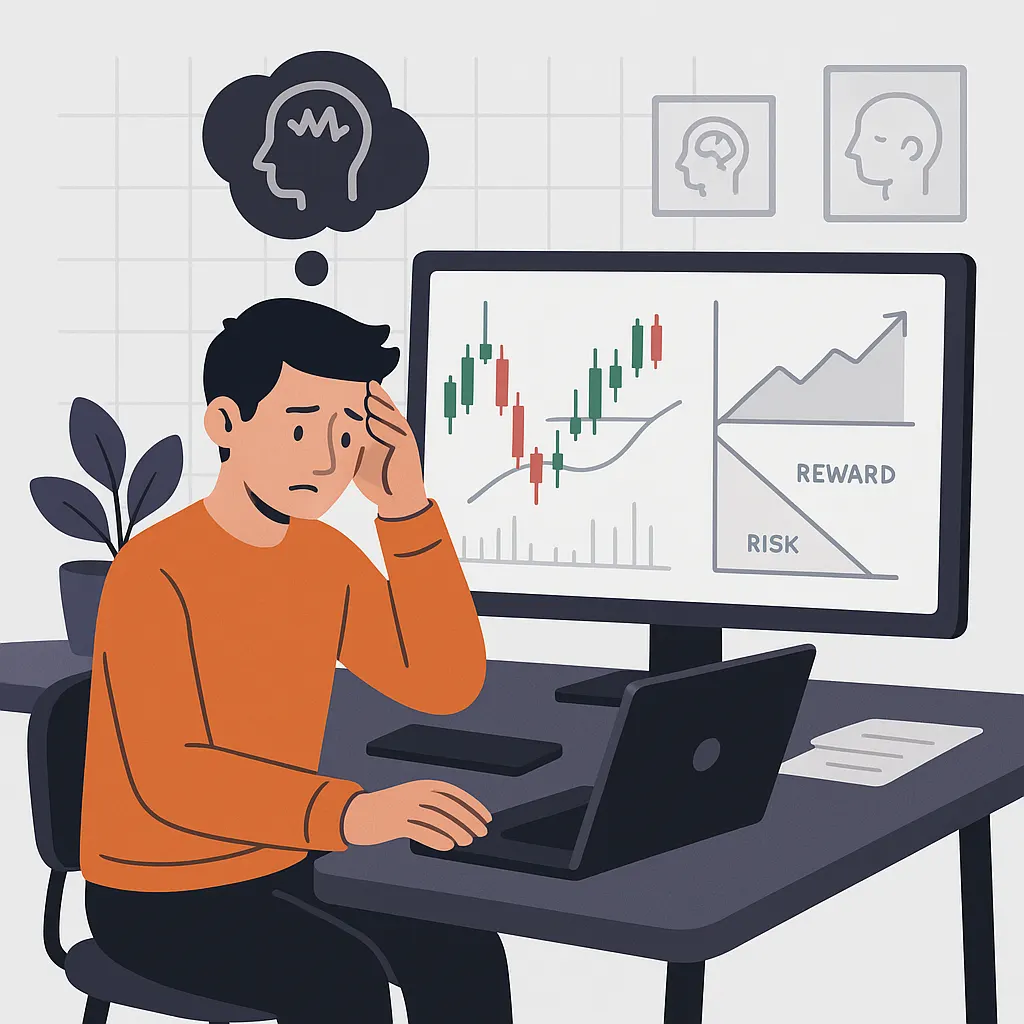
You already know fast trading isn’t just charts and entries—it’s managing yourself when prices move faster than your thoughts. However, most traders underestimate how predictable emotional errors become when speed, leverage, and streaks collide. This guide explains Emotional Mistakes in Fast Trading and gives you concrete rules, checklists, and routines to stop them.
Key Takeaways (Save This Box)
Emotional mistakes in fast trading are rule-breaking decisions driven by fear, greed, and stress instead of your plan.
FOMO, revenge trading, and overtrading are the most common high-frequency psychology errors because speed reduces deliberation time.
Risk limits, checklists, and cooldown rules reduce impulsive trades by removing decision-making during peak emotion.
Trade journaling that captures triggers and emotions improves discipline by linking feelings to outcomes and patterns.
Position sizing and a daily maximum loss cap protect account survival even when emotions spike.
A repeatable pre-trade routine and post-trade review convert “willpower” into a system you can follow under pressure.
What are Emotional Mistakes in Fast Trading?
Emotional mistakes in fast trading are plan violations caused by stress, fear, or greed that change entries, exits, or position size in the moment. In practice, that means you deviate from your written rules during scalping, day trading, or news trading because you feel urgency.
Notably, “fast trading” includes any style where decisions happen in minutes (or seconds). For example, a crypto scalper who doubles size after a win is making a fast-cycle decision under emotion, not analysis.
Why Emotional Mistakes in Fast Trading Matter
Emotional mistakes matter in fast trading because speed, leverage, and frequency amplify small errors into large drawdowns. When you take 10–50 decisions per session, one “small” lapse repeats fast.
Importantly, expectancy collapses when you break your risk rules. For example, a strategy with a small edge can still lose money if your average loss grows because you moved stops or added size emotionally.
Additionally, risk-of-ruin rises sharply when you increase position size or trade frequency after losses. For example, two revenge trades in a row can exceed your weekly loss tolerance in 20 minutes.
Overtrading hurts results: Retail investors who trade more tend to earn less; heavy traders underperformed the market by about 6.5% annually in a well-known dataset — Source: Barber & Odean, 2000.
Day trading success is rare: In a large market study, only about 1% of day traders were consistently profitable over time — Source: Barber, Lee, Liu & Odean, 2014.
Leverage risk is real: Most retail CFD accounts lose money, often 70%–80%+ depending on the broker disclosure — Source: ESMA/UK FCA CFD risk warnings, 2023–2024.
Self-control is limited: Under stress, reaction speed rises while deliberation quality drops; sleep loss measurably worsens decision-making — Source: AASM/CDC sleep guidance summaries, 2022–2024 (behavioral performance findings).
The 8 Most Common Emotional Trading Mistakes (and the Fix for Each)
The most common emotional mistakes in fast trading are repeatable patterns of rule-breaking that cluster around FOMO, fear, and ego. Use the same four-part lens for each mistake: What it looks like → Why it happens → Damage → How to stop it (rule + tool + example).
1) FOMO Chasing and Late Entries
FOMO chasing is entering late because you fear missing a move more than you value rule-following. In fast markets, you feel “behind,” so you buy tops or sell bottoms.
What it looks like: You see a candle spike, you enter without your trigger, and your stop becomes “wherever it fits.” For example, you chase a breakout after three large candles and get snapped back immediately.
Why it happens: You’re reacting to recency bias and social proof (price action feels like “everyone knows”). For example, one green candle convinces your brain the next will be green too.
Damage it causes: You pay the worst price, widen stops, and cut winners early. For example, a 1R planned trade becomes a 2.5R loss because you entered late and “had to” move the stop.
How to stop it (rule + tool + example):
Rule: “If entry is late by more than 1 candle (or X seconds), I skip.”
Tool: A two-box entry checklist: Setup valid? Trigger valid?
Example: If your breakout trigger is “close above level + retest,” then a straight spike without retest is an automatic pass.
2) Revenge Trading After a Loss
Revenge trading involves increasing frequency or risk after a loss to ‘win it back,’ which usually breaks risk limits and worsens drawdowns. After a stop-out, your brain seeks emotional relief, not quality entries.
What it looks like: You re-enter immediately, switch timeframes, and “force” a trade. For example, you lose on EUR/USD and instantly take three lower-quality setups to recover.
Why it happens: You’re hit by loss aversion and a threat response. For example, a small loss feels like personal failure, so you try to erase it quickly.
Damage it causes: You stack correlated losses and destroy your daily limit. For example, a -1R loss becomes -4R in 15 minutes because you kept firing.
How to stop it (rule + tool + example):
Rule: “After any stop-out, I must wait 10 minutes and re-check my bias.”
Tool: A cooldown timer + a “next-trade must be A+” filter.
Example: If your plan requires two confluences, you can’t take the next trade unless both appear.
3) Overtrading / “Boredom Trades”
Overtrading is taking trades you wouldn’t take if you had fewer screen hours or stricter filters. In fast trading, boredom looks like “staying productive.”
What it looks like: You trade chop, mid-range entries, or random micro-setups. For example, you take five trades in a tight range because “something has to break.”
Why it happens: You’re chasing dopamine from variable rewards, similar to slot-machine reinforcement. For example, one surprise win from a bad setup teaches your brain to repeat it.
Damage it causes: You raise fees/slippage, lower win rate, and exhaust focus. For example, your best setup appears later, but you’re mentally depleted and miss it.
How to stop it (rule + tool + example):
Rule: “Max trades per session: 3 (or 5). After that, stop.”
Tool: A trade counter on your desk + session alarms.
Example: If you’ve already taken 3 trades, you journal the next “urge” instead of placing it.
4) Cutting Winners Early (Fear of Giving Back Profit)
Cutting winners early is exiting profitable trades before your planned target because you fear a reversal more than you want to follow the plan. This is common after you’ve recently watched winners flip to break-even.
What it looks like: You take profit at +0.3R, then watch price hit +2R without you. For example, you exit on the first pullback even though your rules allow normal retracements.
Why it happens: You’re reacting to loss aversion again, but in “profit form.” For example, unrealized profit feels like “money you already own,” so giving it back feels painful.
Damage it causes: You crush your payoff ratio and turn a winning system into a break-even one. For example, a 45% win-rate system often needs bigger average wins; cutting early removes the edge.
How to stop it (rule + tool + example):
Rule: “No manual exit before my management rule triggers.”
Tool: Pre-defined break-even and partial take-profit rules written on your chart.
Example: Take 25% off at +1R, move stop to -0.2R, and let the rest target +2R.
5) Holding Losers Too Long (Hope/Denial)
Holding losers too long is refusing to exit at your planned stop because you hope the market turns back. In fast trading, the delay can be seconds—but the damage is still large.
What it looks like: Your stop gets hit “in your head,” but you keep it open. For example, you watch -1R become -3R because “it’s oversold.”
Why it happens: You’re stuck in denial plus confirmation bias. For example, you only notice the one indicator that supports staying in.
Damage it causes: One oversized loss can erase multiple winners. For example, if your average win is +0.8R and you take a -4R loss, you need five winners to recover.
How to stop it (rule + tool + example):
Rule: “Stop-loss is placed immediately and never widened.”
Tool: Hard-stop orders + an audit field: “Did I respect stop? Yes/No.”
Example: If your stop is below a structure low, the trade is invalid once price closes below it—exit automatically.
6) Moving Stops / Averaging Down Impulsively
Moving stops or averaging down impulsively is changing risk mid-trade to avoid admitting you were wrong. It often starts as “just a little room.”
What it looks like: You widen your stop twice or add to a losing position without a rule. For example, you buy again because “it can’t go lower,” then it does.
Why it happens: You’re influenced by the gambler’s fallacy and ego protection. For example, you believe a losing streak in price must “balance out” soon.
Damage it causes: Your loss distribution becomes fat-tailed, which raises risk-of-ruin. For example, most trades are small losses, but occasional huge losses destroy the curve.
How to stop it (rule + tool + example):
Rule: “No averaging down unless it’s a pre-planned scale-in at defined levels.”
Tool: A position-sizing sheet that locks risk per trade before entry.
Example: If your plan allows two entries, each must be 0.5R risk, not a random add.
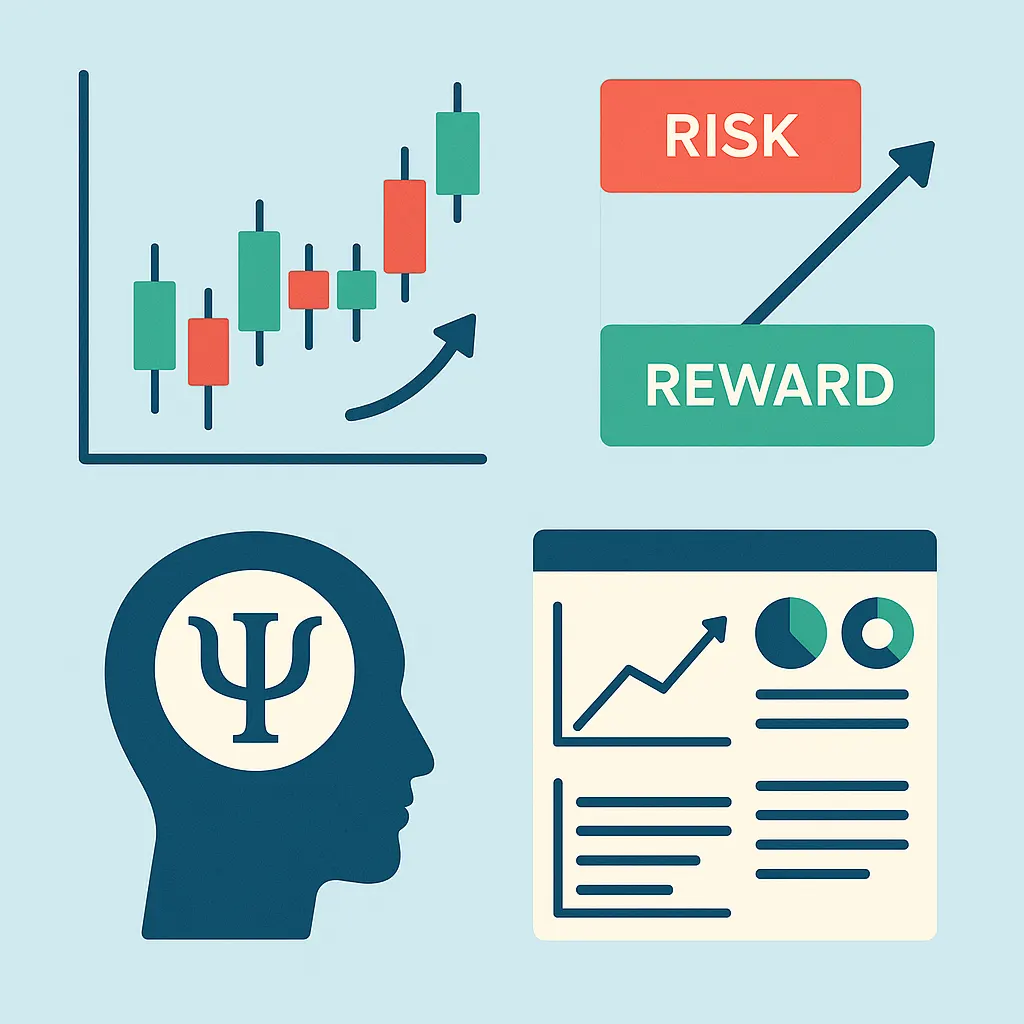
7) Size Creep After Wins (Overconfidence)
Size creep is increasing position size after wins without recalculating risk, usually due to overconfidence. After a green streak, your brain starts expecting it to continue.
What it looks like: You “slightly” bump size each trade until one loss wipes the day. For example, you go from risking 0.5% to 2% because you feel “locked in.”
Why it happens: You’re driven by recency bias and identity (“I’m on fire today”). For example, you attribute wins to skill and losses to bad luck.
Damage it causes: You break your risk model and make results unstable. For example, your strategy might be fine, but your sizing turns it into gambling.
How to stop it (rule + tool + example):
Rule: “Position size changes only weekly, based on a written rule.”
Tool: A fixed-fractional risk setting (e.g., 0.5% per trade) locked in your platform.
Example: If you want to scale, only do it after 20 trades with ≥90% rule adherence.
8) “One More Trade” After Hitting Limits (Loss of Discipline)
“One more trade” is continuing after you hit your daily trade limit or max loss because you feel you can fix the day. This is where discipline breaks hardest.
What it looks like: You’re down -2R (your limit), but you take another trade anyway. For example, you tell yourself it’s “high probability,” even though you’re emotionally charged.
Why it happens: You’re in a depleted self-control state and chasing emotional closure. For example, stopping feels like admitting defeat, so you keep going.
Damage it causes: You turn a controlled red day into a crisis drawdown. For example, -2R becomes -6R, and tomorrow’s mindset collapses too.
How to stop it (rule + tool + example):
Rule: “If daily max loss is hit, platform closed for the day.”
Tool: An account-level lockout or a physical routine (log out + remove device).
Example: When you hit -2% on the day, you screenshot your trades, journal, and stop—no exceptions.
Root Causes: Triggers and Cognitive Biases Behind Impulsive Decisions
Impulsive trading decisions are caused by a mix of brain chemistry, stress triggers, and cognitive biases that distort risk perception. When you know the cause, you can build a mechanical prevention layer.
First, loss aversion makes losses feel roughly twice as painful as gains feel good. For example, you may hold a loser hoping to avoid the emotional pain of realizing the loss.
Next, recency bias makes the last few trades dominate your expectations. For example, three wins can trick you into oversizing because you feel “unstoppable.”
Then, gambler’s fallacy makes you think outcomes “must” revert soon. For example, after five losses you might believe a win is “due,” even though each trade is independent.
Also, confirmation bias makes you hunt for supportive signals and ignore invalidation. For example, you only watch the one indicator that says “buy” while structure says “exit.”
Finally, dopamine and variable rewards keep you clicking. For example, intermittent wins from bad trades train your brain to repeat the behavior even when expectancy is negative.
Behavioral underperformance is documented: High turnover is linked to lower net returns for individuals — Source: Barber & Odean, 2000.
Day trading persistence is costly: A tiny fraction sustain profits over long horizons — Source: Barber et al., 2014.
Regulators warn about retail leverage losses: Most retail CFD accounts lose money — Source: ESMA, 2023–2024 risk warnings.
A Fast-Trader’s Prevention System (Rules + Routine)
A fast-trader’s prevention system is a set of pre-committed rules and routines that remove discretion when emotions spike. Your goal is to make “bad trades” hard to place.
Pre-Market Plan (5–10 minutes)
A pre-market plan is a short written map of what you will trade and what you will ignore. Planning reduces surprise, and surprise triggers emotion.
First, define your market conditions. For example, you write: “Only trade breakouts if ATR is above X and trend aligns on the 15m.”
Next, pre-mark levels and no-trade zones. For example, you mark the prior day high/low and say: “No trades inside the middle 50% range.”
Entry Checklist (20 seconds)
An entry checklist is a yes/no gate that prevents FOMO and random clicks. Checklists work because they force a pause.
Use a simple version:
Setup: Is this one of my top 1–2 setups?
Trigger: Did my entry trigger occur exactly?
Risk: Is stop logical and ≤ my max R?
State: Is my emotion ≤ 6/10?
For example, if your emotion is 8/10 after a loss, you must cooldown even if the chart looks good.
Hard Risk Limits (Non-Negotiable)
Hard risk limits are predefined boundaries that stop you from escalating losses when emotions rise. This is where survival is decided.
Include these three:
Risk per trade: e.g., 0.25%–1.0% of account.
Daily max loss: e.g., -2R or -2% (whichever hits first).
Max trades: e.g., 3–5 per session.
A daily maximum loss limit is a pre-set dollar or percentage threshold that stops trading for the day once hit to prevent emotional escalation. For example, if your account is $5,000 and your daily max loss is 2%, you stop at -$100 including fees.
Cooldown Protocols (If/Then Rules)
A cooldown protocol involves pausing trading for a defined period after a trigger event (e.g., two consecutive losses) to reset decision quality. Cooldowns reduce the chance of revenge trades.
Use simple if/then rules:
If I take 2 losses in a row, then I stop for 30 minutes.
If I break a rule once, then I stop trading and journal.
If I feel “urgent,” then I step away for 5 minutes.
For example, after two stop-outs, your next action is not “find a trade,” but “reset your state.”
Tools, Templates, and Practical Examples
Trading tools for psychology are simple trackers and constraints that make emotional discipline measurable. You’re building feedback, not motivation.
1) Trade Journal Fields (Minimum Effective Version)
A psychology-ready trade journal is a log that captures setup, rule adherence, and emotional triggers alongside results. Without emotions logged, you can’t fix patterns.
Use these fields:
Date/time, market, session
Setup name + screenshot link
Planned entry/stop/target (R)
Actual entry/exit (R)
Rule adherence (0/1) for: entry, stop, size, exit
Emotion score (1–10) before entry and after exit
Trigger tag: FOMO, revenge, boredom, fear, overconfidence
One-line fix: “Next time I will…”
Trade journaling for psychology involves recording the setup, rule adherence, emotional state, and trigger so patterns can be identified and corrected over time. For example, if your worst losses cluster at emotion 7–9/10, you add a rule: “No trades above 6/10.”
2) Emotion Scale (1–10) + Action Map
An emotion scale is a fast self-check that converts feelings into rules. Numbers make it actionable.
Use this map:
1–3: calm → trade normally
4–6: alert → trade A+ only
7–8: hot → no new trades, manage open risk only
9–10: flooded → close platform, cooldown
For example, if you rate yourself at 8 after a near-miss, you stop initiating trades for 30 minutes.
3) Screenshot Journaling (Fast-Trader Friendly)
Screenshot journaling is saving chart images before and after trades to spot repeated mistakes quickly. Images reduce “memory bias.”
Save three screenshots:
Before entry (with your checklist visible)
At exit (with stop/target)
End of day (all trades marked)
For example, a single collage often reveals you chased late entries repeatedly after big candles.
4) Position Sizing Calculator + Daily Max Loss Examples
A position sizing calculator is a tool that converts your stop distance into a consistent dollar risk. Consistency prevents size creep.
Use free options like:
Spreadsheet position sizing calculator (Google Sheets)
Broker/platform calculators (if available)
Volatility sizing via ATR (advanced)
Example rules:
Account: $10,000
Risk per trade: 0.5% = $50
Stop distance: 10 pips → $5 per pip
Daily max loss: 2% = $200 (or -4R)
For example, if you lose 4 trades at -1R, you’re done for the day automatically.
What’s Next: A 7-Day Implementation Plan
A 7-day implementation plan is a short sprint that builds discipline by installing one measurable behavior per day. You’re training adherence first, profits second.
Day 1 — Write limits: Set risk per trade, max trades, and daily max loss in writing. Measure: 0 limit violations.
Day 2 — Add the checklist: Use the 4-question entry checklist for every trade. Measure: 100% checklist usage.
Day 3 — Install cooldowns: Add “2 losses = 30 min break” and “rule break = stop.” Measure: cooldown compliance.
Day 4 — Journal emotions: Add emotion score pre/post trade and trigger tags. Measure: emotion logged on 100% trades.
Day 5 — Fix one mistake: Pick your biggest issue (FOMO or revenge) and add one hard rule. Measure: mistake count drops.
Day 6 — Review with screenshots: Save 3 screenshots per trade and do a 15-minute review. Measure: one pattern identified.
Day 7 — Backtest confidence: Backtest one setup for 50–100 samples. Measure: clear stats + rules tightened.
Conclusion: Consistency Beats Intensity
Consistency is the ability to follow your rules under pressure, and it beats intensity in fast trading. When you reduce emotional mistakes, your edge has room to work.
Ultimately, focus on limits, checklists, cooldowns, and journaling. For example, a trader who stops at -2R and logs triggers will outlast the trader who “feels confident” but breaks rules.
Diagnose Your #1 Trading Mistake — Free
Answer 10 diagnostic questions and instantly find out which trading mistake is costing you the most — with a personalised 3-page correction plan PDF.
- Identifies your primary trading mistake
- Personalised 4-step correction plan
- 3-page PDF emailed to you free
What you'll discover:
-
Revenge Trading
Are you chasing losses?
-
Overtrading
Too many trades per day?
-
Emotional Trading
Feelings overriding logic?
Free. No sign-up required. PDF sent to your email.