 TradeWinGuide

Binary options may look simple: predict up or down, and you either earn a fixed payout or lose your stake. But what most beginners miss is this—payouts, expiry choices, and broker rules quietly decide whether the odds are actually in your favor. This guide breaks down what binary option trading is, how it works step-by-step, and how to start with risk controls that prevent binary option trading beginners blow-ups.
Key Takeaways (Read This First)
Binary option trading is a fixed-outcome trade where you predict whether an asset will finish above or below a specified price at a set expiry, with a predefined payout or loss.
Binary options contracts commonly include high/low, touch/no-touch, and range types, each with different risk characteristics.
Profit potential is capped and losses are predefined, but the win rate needed to break even can be high due to payout structure.
Broker regulation and jurisdiction rules are critical because binary options are restricted or banned in some regions and scams are common.
Demo trading and strict position sizing reduce early mistakes and help validate a strategy before risking real funds.
A beginner process that includes a checklist, a trade journal, and rule-based entries is more reliable than “easy money” signals.
What is Binary Option Trading?
Binary option trading is a derivatives method where you predict whether an asset’s price will be above or below a level at a set expiry for a fixed payout or fixed loss.
To be clear, “binary” means there are two outcomes at expiry: you receive a fixed payout if your prediction is right, or you lose the stake you risked if it’s wrong. For example, you stake $20 on EUR/USD being above a strike price in 5 minutes; you might receive $36 back total (your $20 + $16 profit) if correct, or lose your $20 if not.
Next, binary options feel easy because the question is simple: up or down by a deadline. For example, “Will gold be above $2,350 at 2:05 PM?” is simpler than managing a forex position with stop losses and varying profit.
Then, you should anchor your expectations to the math and the rules. For example, the payout percentage, the strike price, and the expiry time can matter more than your “directional” guess.
Why Binary Option Trading Matters
Binary option trading matters because its fixed payout structure can require a surprisingly high win rate, and because broker quality and legal status vary widely by region.
First, the payout structure creates a built-in hurdle. For example, if a broker pays 80% profit on wins, a long-run break-even win rate is over 55% (more on this below), which is harder than it sounds.
Next, the product has a long history of consumer warnings. For example, regulators have repeatedly flagged fraud, misleading marketing, and unregulated offshore platforms as major risks for retail traders.
Then, legality and regulation are not “nice-to-have.” For example, a platform can look professional and still be unlicensed for your country, which can impact dispute resolution and fund safety.
Statistic — Source: U.S. CFTC, 2024. The CFTC continues to warn that many binary options offerings are illegal when offered by unregistered entities in the U.S., and that fraud is common in this niche.
Statistic — Source: ESMA, 2018 (still in effect via national measures). ESMA introduced EU-wide intervention measures that effectively restricted the marketing/sale of binary options to retail clients, reflecting persistent consumer harm.
Statistic — Source: UK FCA, 2024. The FCA continues to warn UK consumers about high-risk speculative products and scam firms that mimic legitimate brokers.
How Do Binary Options Work? (Payout, Strike, Expiry)
Binary options work by setting a strike price and expiry time; if the market finishes in your predicted direction at expiry, you receive a predefined payout, otherwise you take a predefined loss.
Strike Price (the “line in the sand”)
Next, the strike price is the reference level that determines win/loss at expiry. For example, if EUR/USD is 1.0800 and the strike is 1.0802, “up” means finish above 1.0802 at expiry, not just “go up at any time.”
Expiry Time (the deadline)
Then, the expiry time is when the outcome is decided. For example, a 1-minute expiry can flip on one spread spike, while a 1-hour expiry gives your thesis more room.
In-the-Money vs Out-of-the-Money
After that, “in the money (ITM)” means your option finishes on the winning side at expiry. For example, a “Higher” contract is ITM if price closes above the strike at expiry. “Out of the money (OTM)” means it finishes on the losing side.
Payout and Fixed Loss (the “binary” part)
Finally, payout and loss are defined before you enter. For example, you risk $25 to potentially earn $20 profit (80% payout), and you lose the $25 if wrong (ignoring any partial refund features some platforms advertise).
A binary options payout structure means profits are capped, and the break-even win rate depends on the payout percentage relative to the amount risked.
Concretely, with an 80% payout, your break-even win rate is:
Break-even = 1 / (1 + 0.80) = 55.56%.
For example, if you win 55 out of 100 trades at 80% payout, you’re still slightly negative after fees/slippage.
Statistic — Source: BIS Triennial Survey, 2022. FX remains the world’s largest market, with daily turnover around $7.5 trillion, which helps explain why FX-linked binaries are widely offered.
Statistic — Source: CME Group FX education pages, 2024. Major FX pairs often move in fractions of a percent intraday, meaning short expiries can be dominated by noise rather than trend.
Types of Binary Options Beginners Will See (and What to Avoid)
Binary options types are contract formats that define the winning condition, such as High/Low, Touch/No-Touch, and Range/Boundary.
High/Low (Up/Down)
First, High/Low is the most common beginner format. For example, “Will BTC be above $63,000 at 3:00 PM?” is a simple yes/no question.
Next, beginners should start here because it’s easiest to journal and test. For example, you can track whether your entry followed a trend rule and whether the expiry matched your timeframe.
Touch / No-Touch
Then, Touch/No-Touch pays out if price touches a level before expiry (or never touches it). For example, “Will gold touch $2,360 anytime in the next hour?” can win even if it closes lower later.
After that, you should treat this type as advanced. For example, you need volatility context, not just direction, and spreads can distort “touch” events on some platforms.
Range / Boundary
Next, Range/Boundary pays out if price stays within a band (or breaks out of it). For example, “Will EUR/USD stay between 1.0790 and 1.0820 for 30 minutes?”
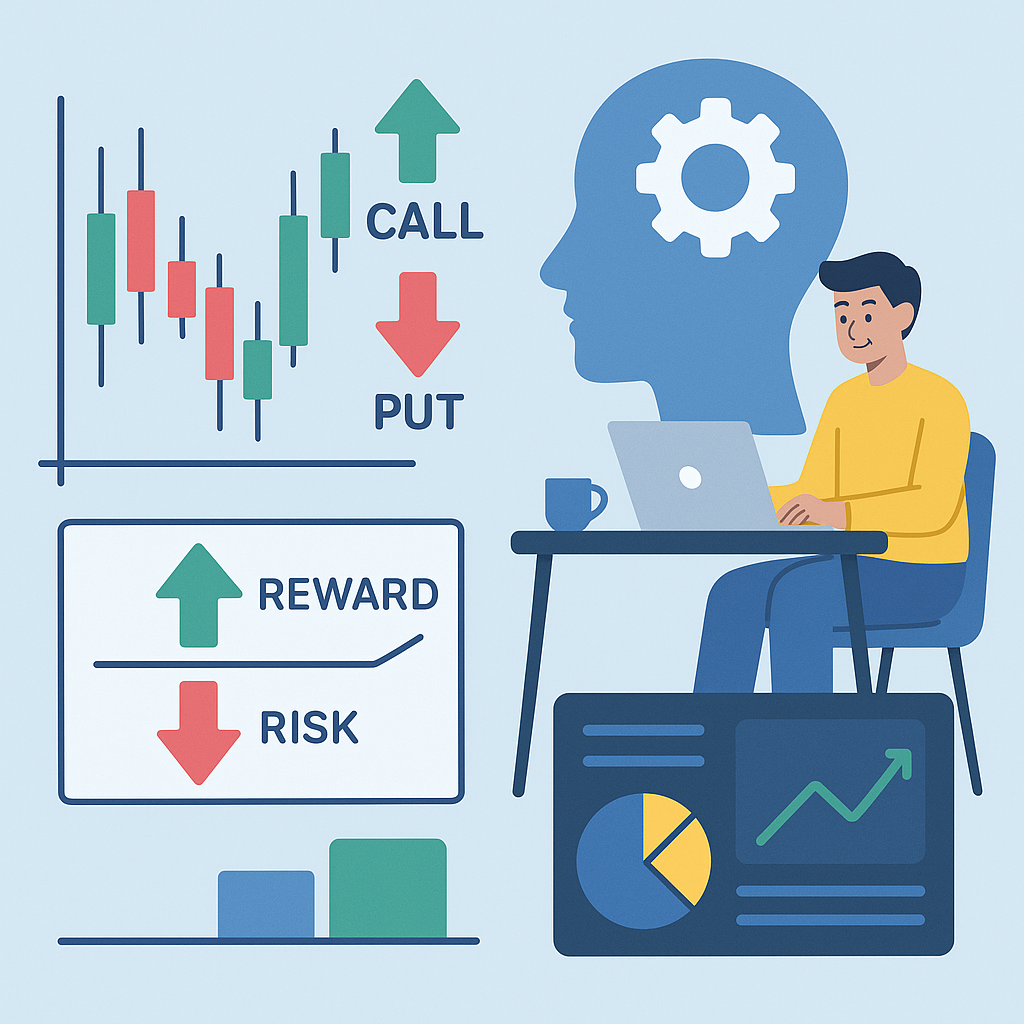
Then, avoid trading ranges blindly. For example, a scheduled CPI release can break a “safe-looking” range in seconds.
What to Avoid as a Beginner
Finally, you should avoid anything that prevents clean testing. For example, unclear pricing, “bonus traps,” copy-trading promises, guaranteed signals, and opaque expiry rules make it hard to verify edge.
Statistic — Source: OECD/GPFI consumer finance scam commentary, 2023. Reports show investment scams increasingly use social platforms and messaging apps to distribute “signals,” which is a common funnel for binary options fraud.
Statistic — Source: UK FCA, 2024. The FCA notes scam ads often use fake celebrity endorsements and cloned websites, which regularly appear in high-risk trading niches.
Step-by-Step: How to Start Binary Option Trading as a Beginner
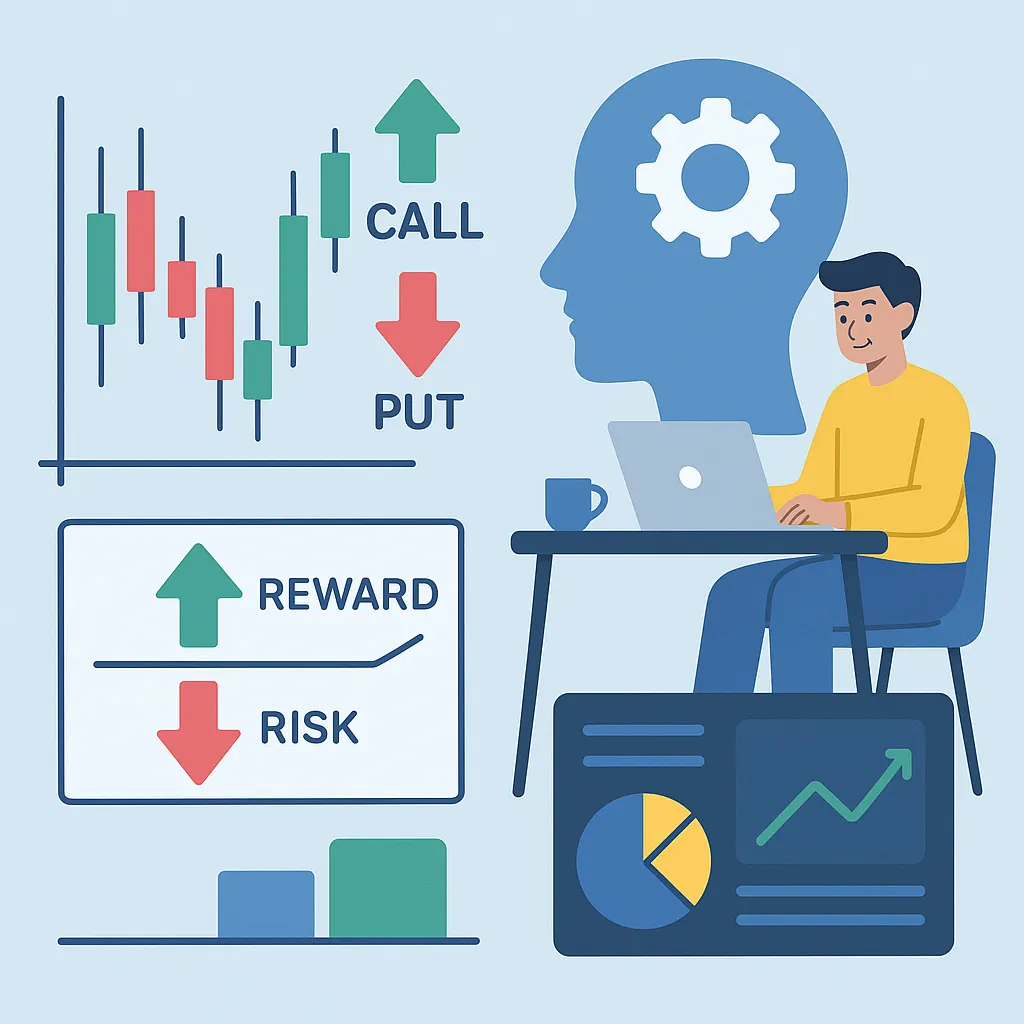
Starting binary option trading as a beginner is a process of choosing a legal, regulated route in your jurisdiction, practicing on demo, and applying strict limits before risking real money.
Step 1: Confirm Legality Where You Live (Non-Negotiable)
First, binary options legality varies by country, so you must confirm local rules before opening an account. For example, the EU has strong retail restrictions, the U.S. allows binaries only on regulated exchanges, and many offshore entities solicit customers illegally.
Binary options legality varies by country, and traders should confirm local rules and regulator guidance before opening an account, according to the relevant national financial regulator.
Concretely, check your regulator’s website and search “[country] binary options warning.” For example, the CFTC (U.S.), FCA (UK), and ASIC (Australia) publish public warning lists and guidance.
Statistic — Source: ESMA, 2018; national regulators, 2024. EU retail restrictions on binary options marketing/sale remain influential through national measures, limiting access for many retail traders.
Statistic — Source: U.S. CFTC, 2024. The CFTC emphasizes binaries are lawful in the U.S. only when offered on designated contract markets (regulated venues).
Step 2: Shortlist Brokers Using a Verification Checklist
Next, broker selection is about regulation, transparency, and execution, not aesthetics. For example, a slick app means nothing if withdrawals are delayed or pricing is manipulated.
Choosing a binary options broker involves verifying regulation in your jurisdiction, reviewing fees/payout terms, and testing order execution on a demo account.
Use this beginner broker checklist:
Jurisdiction fit: the broker is licensed (or permitted) for your country.
Regulator verification: you can find the firm on the regulator register (name + license number).
Clear payout terms: payout % shown before entry, with no hidden conditions.
Transparent pricing: clear strike selection and expiry rules.
Withdrawal clarity: published processing times and KYC requirements.
Demo availability: demo account with realistic quotes and expiries.
No “bonus” pressure: no forced deposit bonuses that lock withdrawals.
Step 3: Start on a Demo Account (and Treat It Like Real Money)
Then, your first “deposit” should be time, not cash. For example, commit to 50–100 demo trades with one simple rule set before you consider going live.
Create a demo routine:
Trade only one asset for two weeks.
Use only one expiry (like 15 minutes) for consistency.
Risk a fixed “stake” per trade (like 1 unit).
Journal every trade with screenshots and reasons.
Step 4: Set Deposit and Loss Limits Before You Fund Anything
Next, define your guardrails first. For example, if you deposit $200, you might limit risk to $2 per trade (1%) and stop after -$10 for the day (5%).
Use these beginner limits:
Stake per trade: 0.5%–1% of account.
Daily loss limit: 3%–5%.
Weekly loss limit: 8%–12%.
Max trades per day: 5–10 (prevents “machine-gunning”).
Risk management for binary options involves limiting stake size per trade, setting a daily loss limit, and avoiding revenge trading after a losing streak.
For example, if you lose three trades in a row, you stop for the day instead of “doubling to win it back.”
Step 5: Your First Trade Checklist (Print This)
Finally, execute like a checklist, not a vibe. For example, you only place a trade if every box is checked.
Beginner first-trade checklist
I’m trading a liquid major asset (EUR/USD, gold, S&P 500 CFD proxy where allowed).
No red-folder news in the next 30–60 minutes.
Trend is clear on a higher timeframe.
Entry is near a known level (support/resistance).
Expiry matches the chart timeframe (not random).
Stake is ≤ 1% of account.
I wrote the reason before clicking buy.
Beginner Strategies + Risk Management (Simple, Testable, Non-Hype)
Beginner binary options strategies are rule-based ways to choose direction and expiry, paired with strict risk controls so one bad streak doesn’t wipe your account.
Strategy 1: Trend-Following “Higher Timeframe Filter”
First, trend-following is a beginner-friendly approach because it reduces random trades. For example, if the 1-hour chart is making higher highs and higher lows, you only look for “Higher” entries on pullbacks.
A simple rule set:
Identify trend on 1H (up or down).
Enter on 5M when price pulls back to a level and resumes trend.
Use a 15M expiry to give the move time.
Concrete example: If EUR/USD is trending up on 1H and bounces off a prior support on 5M, you take a “Higher” with 15M expiry and a 1% stake.
Strategy 2: Support/Resistance + Rejection Candle (Beginner Version)
Next, support and resistance helps you avoid chasing. For example, you wait for price to test a level and show rejection.
Rules:
Mark yesterday’s high/low or a clean horizontal level.
Wait for a rejection candle (long wick, close away from level).
Enter in the rejection direction with an expiry of 3–5 candles on your timeframe.
Concrete example: On a 5M chart, if price spikes into resistance and prints a bearish rejection candle, you take a “Lower” with a 15–25M expiry.
Strategy 3: The “No-News” Rule (A Strategy You Don’t Trade)
Then, your best beginner strategy is often not trading during chaos. For example, you skip 15 minutes before and after major releases like CPI, NFP, or rate decisions.
Concrete example: If U.S. CPI prints in 10 minutes, you close your platform and set a timer instead of gambling on the spike.
Statistic — Source: U.S. Bureau of Labor Statistics, 2024. CPI releases routinely move FX and indices sharply within minutes, which can distort short-expiry outcomes.
Statistic — Source: CME FedWatch (CME Group), 2024. Rate expectation shifts around FOMC decisions can change intraday volatility regimes, increasing binary “coin-flip” behavior.

Risk Rules That Actually Work for Beginners
Finally, risk rules beat “better indicators” in early stages. For example, a modest edge collapses if you double stake after a loss.
Use these simple rules:
1% max stake per trade.
Stop after 3 losses in a row.
Stop after 5 trades if you feel emotional.
Track payout % and compute break-even weekly.
Never increase stake to “get back to even.”
Tools & Practical Examples (With Demo Routine)
Binary options tools are platforms and resources that help you choose better timing, avoid news traps, and document results so you can improve objectively.
Tool 1: Economic Calendar (Free)
First, an economic calendar is a schedule of market-moving releases so you can avoid trading into volatility spikes. For example, you can filter for “high impact” events and block off those windows.
Recommended options:
Tool 2: Charting Platform (Free)
Next, a charting tool helps you see trend and levels cleanly. For example, TradingView lets you mark support/resistance and review historical reactions.
Recommended options:
TradingView (free tier)
MetaTrader 4/5 for charting (free, broker-dependent)
Tool 3: Position Size + Limits Calculator (Simple Spreadsheet)
Then, a spreadsheet turns “I’ll be careful” into a hard rule. For example, you calculate 1% stake sizes automatically and prevent accidental oversizing.
Basic fields to track:
Account balance
Stake % (0.5–1.0%)
Daily loss limit % (3–5%)
Trades taken (cap at 5–10)
Tool 4: Trade Journal (Template + Screenshot Habit)
Next, a journal is your feedback loop. For example, you’ll spot that your losses cluster around certain expiries or news times.
Journal fields that matter:
Asset, time, expiry, payout %
Screenshot before/after
Setup type (trend, level rejection, etc.)
Emotion rating (1–5)
Rule violations (yes/no)
Practical Example: A Full “High/Low” Walkthrough
Finally, a walkthrough shows how the pieces fit together. For example, you’ll see how expiry choice changes the entire trade.
Scenario
Asset: EUR/USD
Higher timeframe (1H): Uptrend
Entry timeframe (5M): Pullback to support + bullish rejection candle
Expiry: 15 minutes
Stake: 1% of account
News: None in next 60 minutes (verified on calendar)
Execution
You wait for price to bounce from support and close strong.
You enter “Higher” only after the candle closes (no guessing mid-candle).
You log the payout %, strike, expiry, and screenshot immediately.
Post-trade
You record whether you followed rules, not just win/loss.
You review after 20 trades to see if this setup is profitable.
What’s Next (A Beginner Learning Plan That Prevents Blow-Ups)
What’s next after learning binary option trading is a structured practice plan that validates your process on demo before risking real money.
First, focus on consistency before complexity. For example, trade one setup and one expiry for a full month so your data is clean.
Use this 4-week plan:
Week 1: Learn mechanics (strike, expiry, payout) + 20 demo trades.
Week 2: One strategy only + 30 demo trades + journal review.
Week 3: Add a no-news filter + 30 demo trades + refine expiry.
Week 4: Create a written trading plan + 20 demo trades under “live rules.”
Then, consider safer alternatives if binaries aren’t a fit. For example, long-term ETF investing or lower-frequency swing trading can reduce “deadline pressure.”
Conclusion
Binary option trading is a fixed-outcome way to speculate on whether an asset finishes above or below a level at expiry, with a predefined payout or loss.
Next, your edge as a beginner won’t come from secret signals. For example, it comes from broker legality checks, demo practice, disciplined expiry selection, and strict risk limits.
Finally, aim for process over speed. For example, if you can follow your rules for 100 demo trades, you’re already ahead of most people who blow up chasing “easy money.”
Diagnose Your #1 Trading Mistake — Free
Answer 10 diagnostic questions and instantly find out which trading mistake is costing you the most — with a personalised 3-page correction plan PDF.
- Identifies your primary trading mistake
- Personalised 4-step correction plan
- 3-page PDF emailed to you free
What you'll discover:
-
Revenge Trading
Are you chasing losses?
-
Overtrading
Too many trades per day?
-
Emotional Trading
Feelings overriding logic?
Free. No sign-up required. PDF sent to your email.