 TradeWinGuide
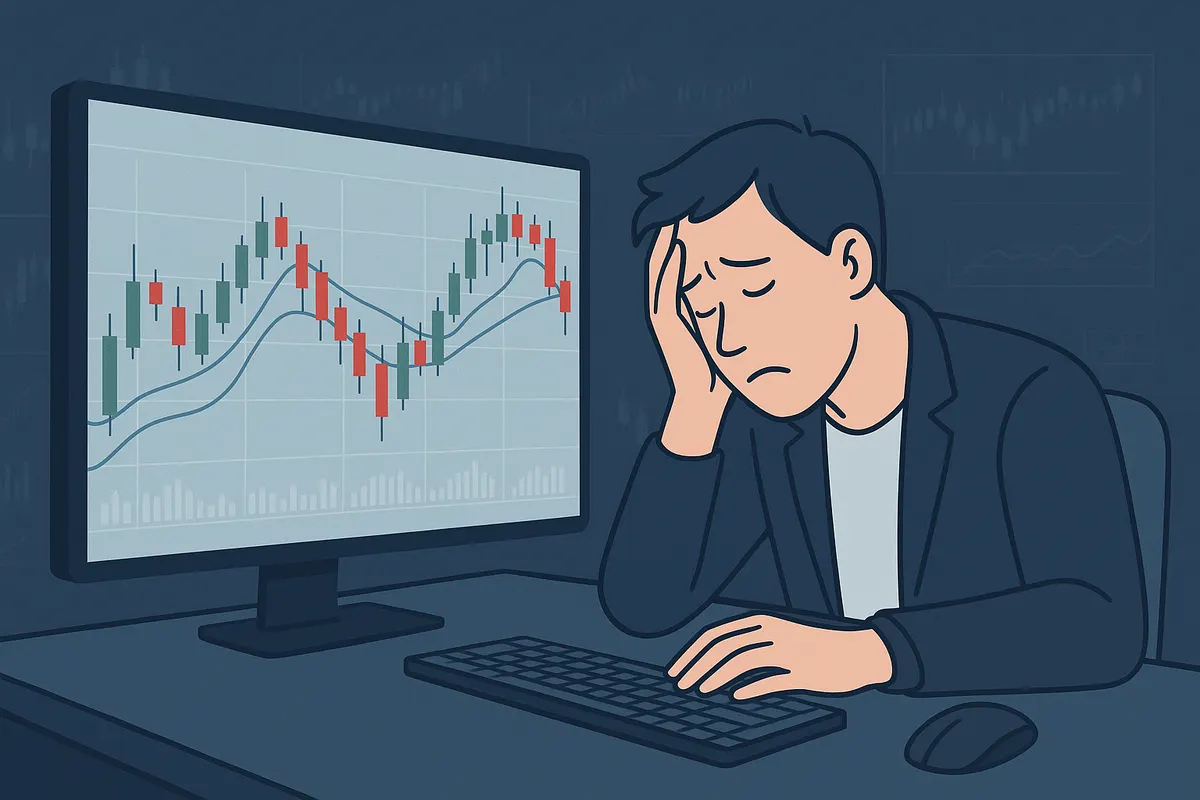
Opening Hook (Acknowledge → Gap → Promise)
You already know that scalping is fast and mentally demanding, and that discipline matters more than one good setup. However, what most traders miss is that your discipline is a limited resource that depletes during the session—often right before the worst trades. In this guide to Scalping Decision Fatigue — Why Your Trades Get Worse After Midday, you’ll learn how fatigue shows up, how long to trade before it hits, and a time-boxed routine that protects expectancy.
Key Takeaways (Save These)
Decision fatigue in scalping is the measurable decline in judgment quality after repeated rapid trading decisions.
Session time limits reduce overtrading by capping exposure to mental depletion and impulsive risk-taking.
Rule-based execution (predefined setups, sizing, stop-trading triggers) lowers cognitive load and improves consistency.
Break schedules and a mid-session reset prevent late-session errors like chasing entries and widening stops.
Max daily loss + max trades are objective guardrails that stop fatigue from turning into drawdowns.
Journaling with fatigue tags (sleep, stress, regime, session length) makes the issue diagnosable and fixable.
What is Scalping Decision Fatigue?
Scalping decision fatigue is the decline in decision quality that occurs after making many rapid trading choices in a short period. In practice, you start the session selective and patient, then gradually become reactive and “clicky.” For example, you may follow your plan perfectly for the first 45 minutes, then take three marginal trades because you “don’t want to miss” the next move.
Decision fatigue in scalping is the decline in decision quality that occurs after making many rapid trading choices in a short period. This matters because scalping forces dozens of micro-decisions: whether to enter, whether to pass, whether spreads are acceptable, whether volatility changed, and whether your stop is still valid. For example, even a simple 1-minute breakout scalp can involve 10+ quick checks before you click.
A scalping session time limit is a pre-set maximum duration (or trade count) after which you stop trading to prevent fatigue-driven errors. This limit works like a circuit breaker for your brain, not just your account. For example, if your best trading happens in the first 60 minutes, your time limit prevents the classic “one more trade” spiral at midday.
Research in psychology links repeated decision-making to reduced self-control and increased impulsivity, which can translate into overtrading and rule-breaking in fast trading environments (cite: Baumeister et al., ego depletion/decision fatigue literature; and/or a reputable behavioral science review). In trading terms, you feel that drop as weaker impulse control. For example, you widen a stop “just this once,” then do it again.
Why Scalping Decision Fatigue Matters
Scalping decision fatigue matters because it increases impulsive errors while you’re still exposed to fast markets. This is why your P&L often looks clean early, then chaotic later. For example, your first three trades match your A+ setup, then your next five are “close enough.”
Notably, fatigue shifts you from system execution to emotion management. You stop reading the market and start reading your P&L. For example, after a small drawdown, you take a low-quality entry just to “get back to green.”
Critically, decision fatigue raises risk per mistake. In scalping, a single late entry can turn a tight stop into a full loss. For example, you chase a candle, your stop must be wider, and your R:R collapses.
Statistically, attention and sleep quality strongly relate to performance and risk. For example, adults sleeping less than 7 hours report worse concentration and more errors the next day.
1 in 3 adults don’t get enough sleep — Source: CDC, 2022
17 hours awake can impair performance similar to a 0.05% BAC — Source: CDC / Dawson & Reid, 1997 (widely cited), summarized in safety research
Work breaks are linked to improved vigilance and fewer errors in attention-heavy tasks — Source: NIH/PMC reviews on rest breaks and fatigue, 2020–2023 (e.g., systematic reviews in occupational fatigue literature)
Common Signs and Triggers of Mental Fatigue in a Scalping Session
Signs and triggers of decision fatigue are the observable behaviors and conditions that predict lower-quality trade decisions later in your session. You can’t fix what you can’t label. For example, “I’m tired” is vague, but “I just broke my entry rule twice” is actionable.
Signs You’re Trading While Fatigued (What It Looks Like)
Decision fatigue signs are repeatable execution leaks that appear after many quick choices. You should treat them like a risk alert. For example, if you miss two entries in a row and then chase the third, your process is slipping.
Late entries and candle chasing (you enter after the move).
For example, you buy the top of the breakout candle instead of the retest.Overtrading (you take trades outside your planned window).
For example, you double your normal trade count after noon.Revenge trading (you try to “undo” a loss fast).
For example, you increase the size on the next setup without a rule.Sloppy risk (wider stops, inconsistent sizing, moving targets).
For example, you widen a stop because “it’ll come back.”Lower selectivity (B setups feel like A setups).
For example, you take a weak level because the price is “near” it.
Triggers That Accelerate Fatigue (Why It Happens Faster Some Days)
Decision fatigue triggers are the inputs that increase cognitive load and reduce self-control. You can often predict them before you trade. For example, if you slept poorly and the market is choppy, your time limit should shrink.
Market regime mismatch (ranging chop while you force breakouts).
For example, you keep trading “breakouts” that instantly fade.Over-monitoring (watching too many pairs/timeframes).
For example, you flip between 6 charts and miss your best setup.Poor sleep + stress (lower baseline self-control).
For example, you feel rushed and impatient from the first minute.Caffeine spikes (jittery focus, then a crash).
For example, you feel “locked in” for 20 minutes, then foggy.News/volatility bursts (more rapid decisions per minute).
For example, spreads widen and your stop placement becomes uncertain.
Statistically, caffeine is common and can be double-edged for traders. For example, most U.S. adults consume caffeine daily, which can mask fatigue early and worsen crashes later.
About 85% of U.S. adults consume at least one caffeinated beverage daily — Source: FDA, 2024
High stress is widely reported among workers and correlates with worse cognitive performance — Source: APA Stress in America reports, 2023–2024
Choppy conditions increase error rates in fast decision tasks (fatigue + volatility is multiplicative) — Source: behavioral/attention research summarized in fatigue reviews, 2020–2023 (NIH/PMC)
How Long Should a Scalping Session Last? (Time-Box Rules That Work)
A scalping session should last only as long as you can execute your rules with stable accuracy, which is usually 30–120 minutes for most retail traders. Your edge is a mental performance problem as much as a strategy problem. For example, if your last 30 minutes have the most rule breaks, that’s your cap—even if you “feel fine.”
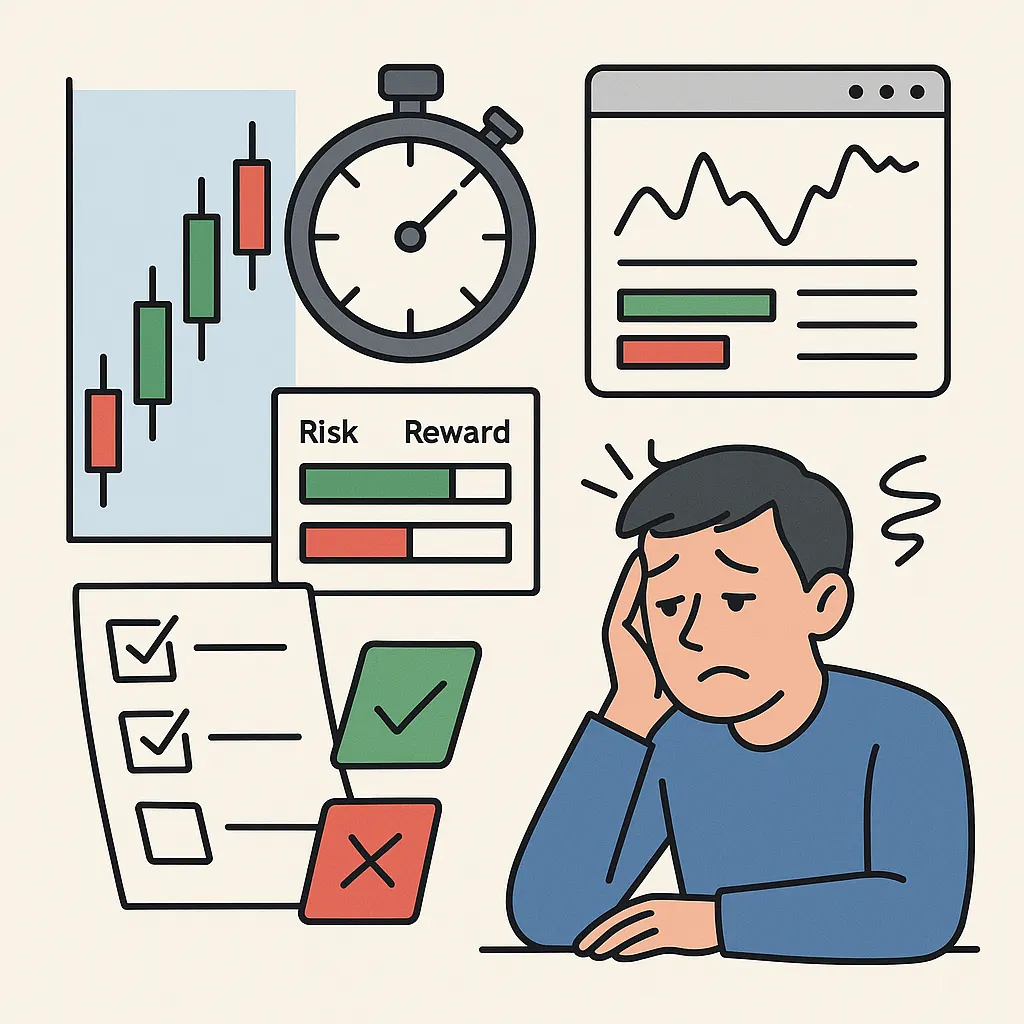
Recommended Scalping Session Durations (By Experience Level)
Recommended session durations are practical ranges that balance opportunity with cognitive sustainability. You should start conservatively and earn more time through data. For example, you can extend by 15 minutes after two weeks of stable execution.
Beginner (0–6 months): 30–45 minutes
For example, trade one main window like London opens only.Intermediate (6–24 months): 45–75 minutes
For example, trade London open plus one structured reset break.Experienced (2+ years, proven rules): 60–120 minutes
For example, split into two 45-minute blocks with a mandatory reset.
Statistically, shorter, structured work blocks improve focus for many people. For example, time-boxing methods reduce mental drift and decision overload in demanding tasks.
Task switching can reduce productivity by large margins in knowledge work — Source: APA (task switching summaries), updated guidance cited widely (ongoing)
Frequent interruptions increase errors and stress markers — Source: NIH/PMC attention and interruption research, 2020–2023
Rest breaks improve vigilance in sustained attention tasks — Source: systematic reviews in occupational fatigue, 2020–2023 (NIH/PMC)
The “Stop Before Midday” Rule (A Simple Scalper Time Limit)
A practical scalper trading session time limit rule is to stop trading after your first high-quality window ends, or after a fixed cap, like 60–90 minutes, whichever comes first. This rule prevents the midday slide when liquidity/conditions change, and your brain is already taxed. For example, you trade 8:00–9:15, then stop regardless of P&L.
Here are three time-limit options you can test:
Clock cap: 60 minutes total trading time.
For example, the timer starts at your first executed trade.Trade cap: 8–12 trades maximum.
For example, you stop at trade #10 even if you “see more.”Quality cap: stop after 2 rule breaks.
For example, one chased entry + one moved stop ends the session.
The Midday Effect (Why Your Trades “Get Worse After Noon”)
The midday performance drop is the combination of cognitive depletion plus changing market conditions after peak sessions. Many scalpers confuse this with “bad luck.” For example, after London open, volatility often compresses and fake moves increase, which punishes reactive entries.
Statistically, major FX volume concentrates in overlapping sessions. For example, liquidity is highest when London and New York overlap, which often produces cleaner movement than thin midday conditions.
FX is a $7.5T/day market — Source: BIS Triennial Survey, 2022
Volume concentrates in major session overlaps (commonly documented by institutional education and liquidity studies) — Source: BIS commentary and market microstructure education (BIS, 2022; CME/ICE educational materials, 2023–2024)
Retail traders often underperform due to behavior rather than strategy alone — Source: ESMA CFD risk warnings and provider data disclosures, 2023–2024 (risk disclosure trend is consistent)
The Anti-Decision-Fatigue Scalping Routine (Pre, During, Post)
A fatigue-proof scalping routine involves three phases: pre-session rules (setups and limits), in-session time boxing (breaks and cooldowns), and post-session review (journal tags and metrics). This routine reduces choice overload and makes stopping automatic. For example, you decide your max trades before you see the first candle.
Pre-Session Protocol (10–15 Minutes)
Pre-session rules are fixed decisions you make before markets tempt you into improvising. You’re building guardrails while your brain is fresh. For example, you predefine “I will only trade pullbacks to VWAP in trend.”
Use this checklist:
Start with one market and one timeframe.
For example, trade only EURUSD 1m/5m, not six pairs.Define today’s market regime in one line.
For example, “Trending up; buy pullbacks only.”Pick 1–2 A+ setups only.
For example, “break-and-retest + momentum candle.”Set hard limits (written, visible).
For example, “Max 10 trades, max -2R, stop after 2 losses.”Decide your session box and break schedule.
For example, 45 minutes trading, 10 minutes off-screen.Run a 60-second body check.
For example, if you feel wired or foggy, reduce size or time.
Statistically, writing goals and rules improves follow-through in behavior change. For example, implementation intentions (“If X, then Y”) increase compliance.
If-then planning improves goal execution in meta-analyses — Source: Gollwitzer implementation intentions literature, updated meta-analyses (commonly cited; continued in behavioral science reviews through 2020s)
Sleep loss worsens executive function and impulse control — Source: NIH/PMC sleep cognition reviews, 2020–2024
Stress impairs working memory and decision quality — Source: APA and NIH/PMC stress cognition reviews, 2020–2024
In-Session Protocol (Time-Box + Micro-Resets)
In-session time boxing is the deliberate limitation of exposure to decision load while markets are live. You’re preventing the slow drift into impulsivity. For example, a timer forces you to stop even when the next candle looks tempting.
Session Template A (Beginner): 35 Minutes Total
A beginner scalping template is a short, strict window that prioritizes perfect execution over opportunity. You’re training discipline first. For example, you aim for 3–5 trades, not 20.
0–5 min: observe only (no trades)
5–25 min: trade A+ setups only
25–30 min: mandatory break off-screen
30–35 min: one final focused block, then stop
Session Template B (Intermediate): 70 Minutes Total (Split Block)
An intermediate scalping template is a split session that resets attention halfway through. You’re managing fatigue proactively. For example, you treat the second block like a new session.
Block 1: 30 minutes trading
Reset: 10 minutes off-screen + hydration
Block 2: 30 minutes trading
End: 5 minutes screenshot + notes
Session Template C (Experienced): 2 x 45 Minutes (Two Separate Windows)
An experienced scalping template is two isolated windows separated by full recovery time. You’re avoiding long, continuous monitoring. For example, you trade London open, then New York open, with a real break between.
Window 1: 45 minutes max
Recovery: 90–180 minutes (no charts)
Window 2: 45 minutes max
Hard stop: no “third window.”
The 90-Second “Mid-Session Reset” (Do This When You Feel the Slide)
A reset routine is a short sequence that interrupts impulsive loops and restores rule-based thinking. You should run it after a win streak, a loss streak, or any urge to chase. For example, you feel annoyed after a stop-out and want to “hit back.”
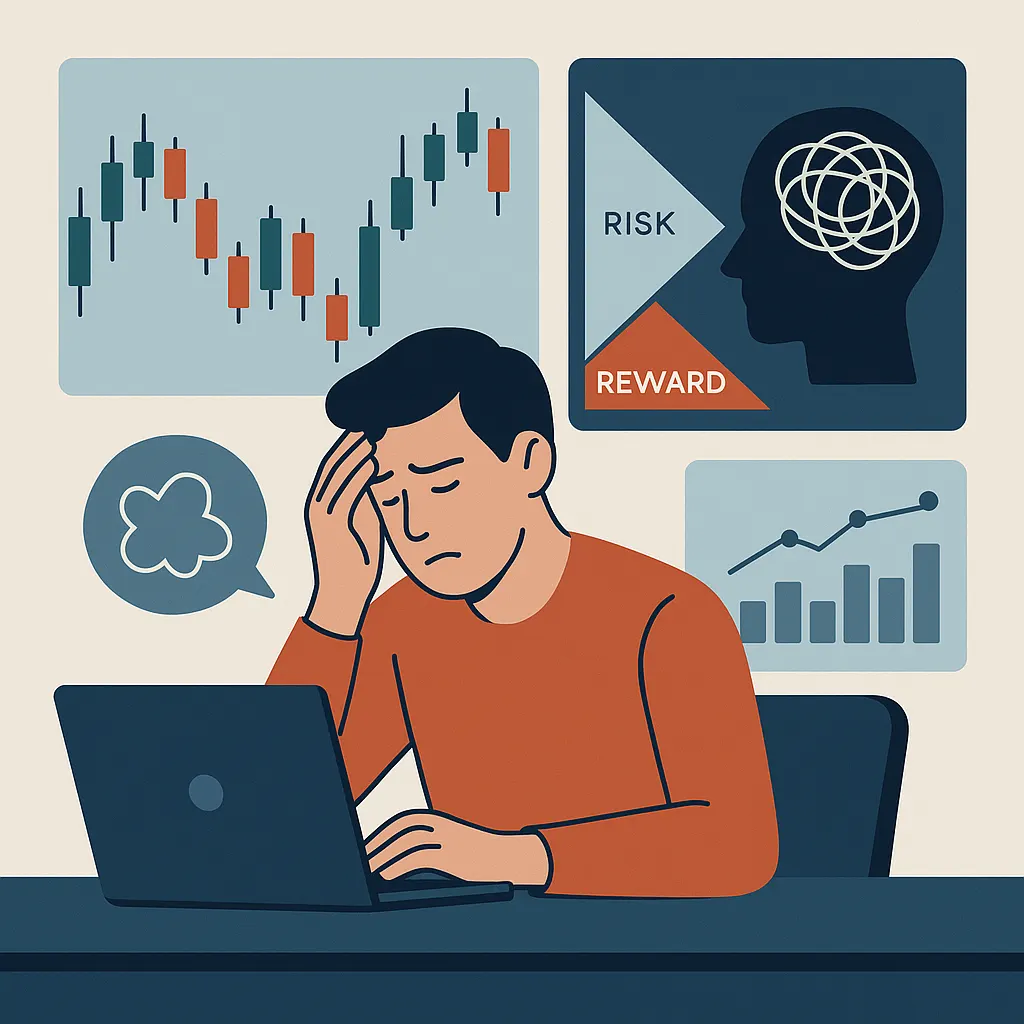
Do this in order:
Stand up and look away from the chart (20 seconds).
Breathe 4-4-6 (inhale 4, hold 4, exhale 6) for 3 cycles.
Read your limits out loud (max trades, max loss, setups).
Ask one question: “Is the next trade A+ by my definition?”
If not, you wait 3 minutes before any entry.
Post-Session Protocol (10 Minutes That Make You Money Later)
Post-session review is the process of converting fatigue from a vague feeling into measurable data. This is where you find your true time limit. For example, you discover your win rate drops after trade #9.
Use this quick review:
Screenshot your best and worst trade.
For example, annotate why the worst one was “B- setup.”Tag the session with fatigue drivers.
For example, “Sleep 5/10, stress 7/10, chop, caffeine high.”Record three numbers: trade count, rule breaks, net R.
For example, “11 trades, 3 rule breaks, -0.8R.”Write one fix for tomorrow.
For example, “Max 8 trades, no countertrend entries.”
Risk Controls That Reduce Decisions (And Protect Expectancy)
Risk controls that reduce decisions are predefined limits and automation that remove “in-the-moment” judgment calls when you’re tired. Less discretion means fewer fatigue-based mistakes. For example, a hard max loss ends the day before you negotiate with yourself.
The Three Core Stop-Trading Rules (Non-Negotiable)
Stop-trading rules include a maximum daily loss, a maximum number of trades, and a mandatory cooldown after consecutive losses. These rules prevent fatigue from compounding into drawdowns. For example, after two losses, you must step away before you place trade #3.
Set these defaults and adjust later:
Maximum daily loss: -2R to -3R (or 1–2% max).
For example, if your risk per trade is 0.25R, you stop at -2R.Maximum trades: 8–12 (based on your data).
For example, if trade #13 is often impulsive, cap at 10.Cooldown after consecutive losses: 10–20 minutes.
For example, after 2 losses, you must leave the desk.
Predefine Your Setups to Lower Cognitive Load
Predefined setups are rule-locked trade patterns that reduce analysis paralysis and prevent “story trading.” Your brain gets fewer choices, so fatigue hits later. For example, you only trade “trend pullback to level + rejection candle.”
A simple two-setup menu:
Setup A: Trend pullback continuation
Rules: trend filter + pullback zone + rejection trigger + fixed stop.
Example: price above 200 EMA, pulls to VWAP, prints rejection wick.Setup B: Range fade at extremes
Rules: range identified + extreme level + failure swing + tight invalidation.
Example: price hits range high, fails to close above, you fade.
Standardize Position Size to Remove a Major Decision
Standardized sizing is the practice of using fixed risk per trade so you don’t “feel-size” entries under stress. This stabilizes your psychology. For example, every trade risks exactly 0.25R, no exceptions.
Use a tool-based workflow:
Determine stop distance in pips/points.
Calculate lot size automatically.
Place bracket orders with one hotkey.
Statistically, retail risk disclosure shows most accounts lose when leverage and poor risk control combine. For example, many CFD providers disclose that the majority of retail accounts lose money.
Most retail CFD accounts lose money (often 70%+ by provider) — Source: ESMA/UK FCA CFD risk disclosures, 2023–2024 (provider-specific percentages vary)
FX daily turnover is $7.5T which attracts leverage and speed — Source: BIS, 2022
Stress and fatigue correlate with increased risk-taking in decision research — Source: NIH/PMC reviews on stress, fatigue, and risk behavior, 2020–2024
What to Do Immediately After a Losing Streak (Anti-Revenge Protocol)
A losing-streak protocol is a forced sequence that blocks revenge trading when emotions spike. It should be mechanical. For example, you take two losses and feel the urge to double size.
Run this exact protocol:
Stop trading for 15 minutes (timer on).
Mark whether losses were “good losses” or rule breaks.
If any rule break occurred, end the session.
If both were good losses, reduce size by 25% for the next trade.
Only resume if one A+ setup appears inside your time box.
Decision-Fatigue Risk Score (Self-Assessment You Can Use Today)
A decision-fatigue risk score is a simple checklist that estimates how likely you are to trade poorly later in the session. You use it to adjust time limits and size before damage occurs. For example, if your score is high, you trade half-time and half-size.
Score Yourself (0–20)
Decision fatigue risk scoring is the act of converting subjective state into an objective trading constraint. This reduces bargaining and rationalization. For example, you stop telling yourself “I’m fine” when your score says otherwise.
Give yourself points:
Slept < 7 hours last night: +3
High stress today (7/10+): +3
Already traded 60+ minutes: +3
Monitoring 3+ instruments: +2
Had 2+ consecutive losses: +3
Skipped a break in the last 45 minutes: +2
Caffeine spike (large dose in <1 hour): +2
You feel urgency/FOMO right now: +2
Interpret Your Score
Risk score thresholds are action triggers that tell you exactly what to do next. This is how you trade like a professional under pressure. For example, a high score automatically ends discretionary trading.
0–5 (Low): trade normal plan.
6–10 (Moderate): cut session by 25% and cap trades at 8.
11–15 (High): cut size by 50% and stop after 1 loss.
16–20 (Extreme): no live trading; journal and replay only.
Tools and Practical Applications (Timers, Checklists, Automation)
Scalping anti-fatigue tools are simple systems that reduce real-time decisions and enforce stop rules automatically. Tools matter because tired brains negotiate; systems don’t. For example, a platform alert ends your session even when you want “one more.”

1) Timers and Focus Blocks
Trading timers are external constraints that cap exposure to cognitive load. A timer replaces willpower. For example, you end at 60 minutes even if you’re slightly down.
iPhone/Android timer (free)
Pomodoro apps (Forest, Focus To-Do, Toggl Track)
Desktop timers (Windows Clock, macOS Clock)
2) Platform Alerts and Hard Stops
Price and time alerts are platform features that reduce constant monitoring. Alerts prevent chart-staring, which drains attention. For example, you set an alert at your level and leave the screen.
TradingView alerts
MetaTrader (MT4/MT5) alerts and scripts
cTrader alerts
3) Checklists (Printed or On-Screen)
Trading checklists are decision filters that keep you from taking “almost” setups. A checklist turns subjective feelings into binary gates. For example, if trend filter fails, you don’t trade.
Checklist items to include:
Regime: trend/range confirmed
Setup type: A or B only
Trigger candle present
Spread acceptable
Stop location valid
Risk fixed (no resizing)
4) Journaling Tags to Diagnose Fatigue
Fatigue journaling is the practice of tagging sessions with variables that predict mistakes. Tags turn “I guess I was tired” into patterns you can fix. For example, you learn that “caffeine high + chop” equals overtrading.
Use tags like:
Sleep: 1–10
Stress: 1–10
Session length (minutes)
Trade count
Rule breaks (count + type)
Market regime (trend/range/chop)
News volatility (Y/N)
5) Hotkeys, Brackets, and Partial Automation
Execution automation uses hotkeys and bracket orders to reduce manual steps under pressure. Fewer clicks mean fewer errors. For example, one hotkey places entry + stop + target instantly.
Examples:
Bracket orders (OCO)
One-click trading with predefined risk
Hotkeys for close partial/close all
What’s Next: A 7-Day Fatigue-Proof Trading Plan
A 7-day fatigue-proof trading plan is a short experiment that finds your optimal session length and stop rules using data, not feelings. You’re not trying to maximize trades; you’re trying to maximize quality. For example, you measure rule breaks by time block.
The 7-Day Plan (Copy/Paste)
A one-week plan is a controlled test of time limits, breaks, and guardrails. Consistency comes from repetition. For example, you keep the same window and setups all week.
Day 1–2: Baseline
Trade your normal window.
Record: session length, trades, rule breaks, net R.
Day 3–4: Add a Time Cap
Set a 60-minute max OR 10-trade max.
Record the same metrics.
Day 5: Add Cooldowns
Add 15-minute cooldown after 2 losses.
Record whether revenge impulses drop.
Day 6: Add a Mid-Session Reset
Use the 90-second reset after any urge to chase.
Record rule breaks by time block.
Day 7: Review + Lock a Rule
Choose one permanent constraint: time cap, trade cap, or max loss.
Write your final “stop trading” triggers.
Statistically, short-cycle reviews improve decision quality in performance tasks. For example, feedback loops reduce repeated mistakes faster than “hoping discipline improves.”
Deliberate practice requires feedback loops to improve performance — Source: performance psychology literature summarized in reviews (NIH/PMC and academic reviews, 2020–2024)
Most behavior change fails without tracking (common finding across health/finance habit research) — Source: behavioral science reviews, 2020–2024
Risk warnings show behavior dominates outcomes for many retail traders — Source: ESMA/FCA provider disclosures, 2023–2024
Conclusion: Protect Attention Like Capital
Scalping decision fatigue is the decline in decision quality that occurs after making many rapid trading choices in a short period. When you ignore it, you donate your best edge to your worst hour. For example, your morning discipline pays for your midday impulsivity.
A scalping session time limit is a pre-set maximum duration (or trade count) after which you stop trading to prevent fatigue-driven errors. When you pair that limit with stop rules, breaks, and predefined setups, you turn discipline into a system. For example, you stop at -2R or trade #10 without debate.
Ultimately, protecting your attention is protecting your account. If you treat focus like capital, you’ll stop giving back your best mornings to your worst afternoons.
Diagnose Your #1 Trading Mistake — Free
Answer 10 diagnostic questions and instantly find out which trading mistake is costing you the most — with a personalised 3-page correction plan PDF.
- Identifies your primary trading mistake
- Personalised 4-step correction plan
- 3-page PDF emailed to you free
What you'll discover:
-
Revenge Trading
Are you chasing losses?
-
Overtrading
Too many trades per day?
-
Emotional Trading
Feelings overriding logic?
Free. No sign-up required. PDF sent to your email.