 TradeWinGuide
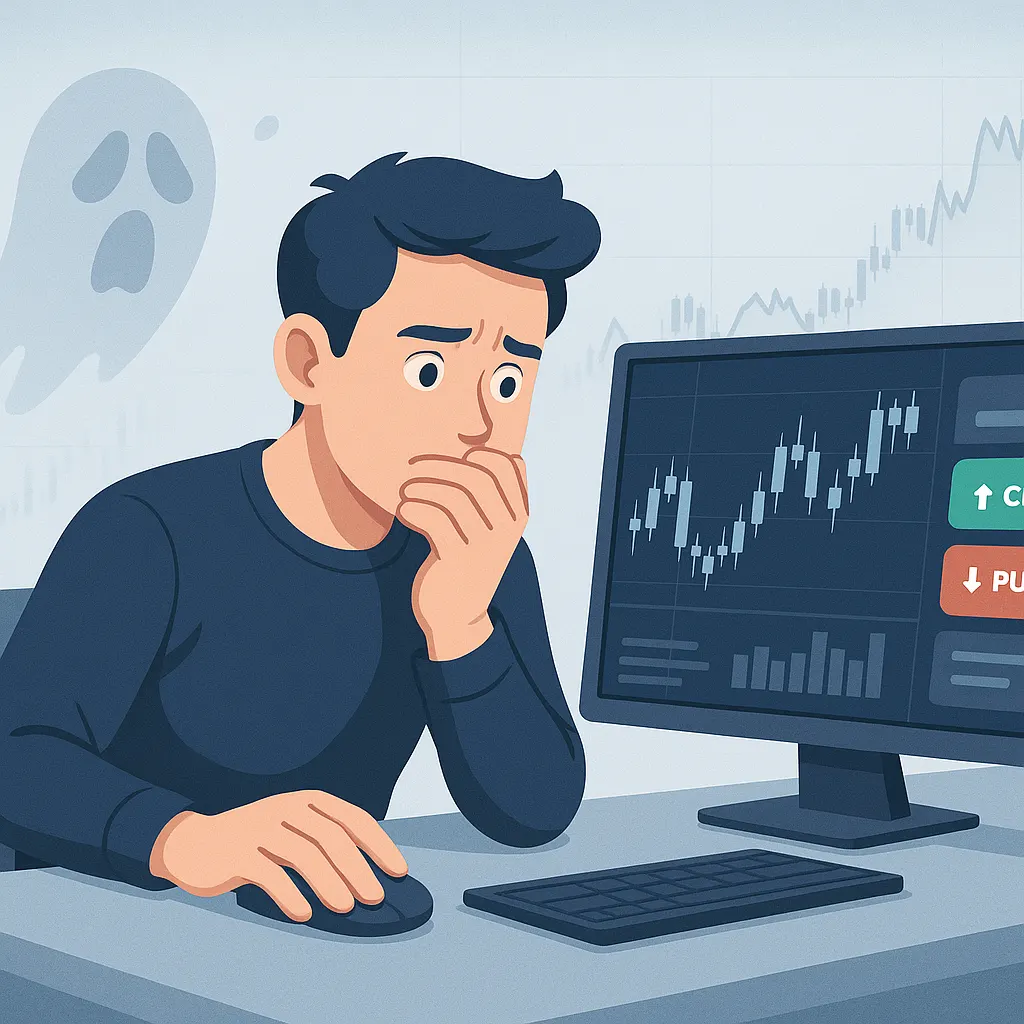
You already know that scalping rewards speed and precision, and you’ve probably felt how quickly “one more trade” turns into ten. What’s missing is a simple set of guardrails that stop impulsive entries before they happen. In this guide, you’ll learn a rules-based system, checklists, and emotional reset tactics to stop overtrading while still taking your best setups.
Key Takeaways (Save This)
Overtrading when scalping is the repeated taking of marginal or impulsive trades beyond a defined plan, usually triggered by emotion or boredom.
Trade-frequency limits and session-based rules reduce the number of low-quality entries and protect expectancy.
A pre-trade checklist and “A+ setup only” criteria turn discretion into a repeatable decision process.
Daily loss limits, cooldown periods, and stop-trading rules prevent revenge trading spirals.
Emotional control routines improve consistency by separating execution quality from short-term P&L swings.
Tracking metrics like trades per session, rule-break rate, and average R per trade makes overtrading measurable and correctable.
What Is Overtrading When Scalping?
Overtrading when scalping is taking more trades than your plan allows, usually by entering lower-quality setups after boredom, fear, or a loss. This often shows up as scalping too many trades on the 1–5 minute chart with weaker confirmations and wider emotional swings.
First, look for session-level symptoms you can measure. For example, you start with a clean plan, then double your trade count after one loss.
What overtrading looks like in real sessions
Next, use this “you might be overtrading if…” checklist. For example, if you planned 6 trades but took 18, that’s not “activity,” it’s plan drift.
You trade outside your window (e.g., you planned to open London, you traded all day).
You re-enter immediately after a stop-out without a new setup.
You lower standards (A setup becomes “close enough”).
You widen stops or remove stops to “give it room.”
You increase size after losses to “make it back.”
You feel relief when you finally stop, not satisfaction.
Then, separate overtrading from high-frequency trading. For example, a professional may take 30 trades if the system’s rules demand it, but they still follow fixed filters, fixed risk, and fixed stop conditions.
Statistic — Source: FINRA, 2023. FINRA reported it received 1,030,000+ investor complaints and inquiries in 2023, with a significant share tied to trading behavior and account issues.
Why it matters: retail traders often confuse “more action” with “more edge.”
Finally, if you’re new to the mechanics, review the foundations before adding rules.
Why Stopping Overtrading When Scalping Matters
Stopping overtrading when scalping matters because excessive, low-quality entries reduce expectancy, increase trading costs, and amplify emotional errors. Even with a decent win rate, overtrading can turn a workable edge into a slow bleed.
Overtrading kills expectancy (even with a “good” win rate)
First, scalping works on thin margins. For example, if your average win is 0.6R and average loss is 1R, a small drop in win rate from impulsive trades can flip you negative.
Planned system: 55% win rate, +0.10R expectancy
After overtrading: 48% win rate, -0.10R expectancy
Same “skill,” different trade selection
Costs compound faster than you think
Next, spreads and commissions punish extra clicks. For example, paying an extra 0.2–0.8 pips repeatedly can erase your edge on the 1-minute chart.
Statistic — Source: BIS, 2022. The BIS Triennial Survey reported $7.5 trillion in average daily FX turnover, reflecting extremely competitive pricing—yet retail execution still faces spread/commission friction.
Overtrading creates psychological debt and burnout
Then, understand the mental side. For example, each impulsive trade creates a “need to fix it,” which fuels revenge trading in forex and decision fatigue.
Statistic — Source: APA, 2023. The American Psychological Association found 46% of adults reported stress affected their behavior in the last month.
Translation for traders: stress reliably changes behavior, including risk-taking.
Finally, academic research consistently links heavy trading to weaker results.
“Trading is hazardous to your wealth.” — Barber & Odean, 2000
For example, their findings show that more trading activity often correlates with lower net returns after costs.
Diagnose Your Overtrading: Triggers, Patterns, and “When It Starts”
Overtrading triggers are repeatable situations that push you into unplanned entries, usually boredom, FOMO, revenge impulses, news volatility, or platform-driven overclicking. When you name your triggers, you can design rules that block them.
The 5 most common triggers (and the fast fix)
Next, use this trigger-to-fix map. For example, if boredom is your trigger, your fix is a trade window + alarm that tells you when to stop watching.
Trigger: What it feels like: What you do: Fix that works fast. Boredom trading“Nothing happening” Force trades, Timed windows + walk-away rule Revenge trading“I need it back” Oversize, rapid re-entryCooldown + stop-after-2 ruleFOMO“It’s moving without me” Chase candlesA+ checklist + limit ordersNews volatility“Easy pips!”Trade spikes, News filter + volatility block, Platform overclicking“One more try”, Rapid-fire entries, One-click disable + hotkey lock
A simple “overtrading timeline” to journal
Then, document when the spiral begins. For example, you might be fine for 25 minutes, then break the rules after the first red trade.
Write these four timestamps:
Session start time
First rule break time
Largest loss of time
Session end time
That pattern tells you where to place guardrails.
Statistic — Source: CME Group, 2024. CME education resources emphasize pre-defined risk controls because volatility clusters around scheduled events and can distort intraday decision-making.
For example, a CPI release can widen spreads and trigger slippage on 1–5 minute entries.
The “make it back” illusion (and what to do instead)
Next, treat “making it back today” as a red flag. For example, if you’re down --1.5R, your only job is to protect your process so you can trade tomorrow.
Build Scalping Discipline Rules That Reduce Overtrading Fast
Scalping discipline rules are predefined limits on behavior and risk that remove decision-making under stress. These rules work best when they cap both how much you trade and how much you can lose.
Scalping discipline rules work best when they cap both behavior (max trades per session) and risk (max daily loss), because they remove decision-making under stress.
Before you set rules, make sure you have a written framework.
Rule 1: Set a max trades per session (your “speed limit”)
First, define a number that forces selectivity. For example, many retail scalpers improve fastest at 5–12 trades per session while they rebuild discipline.
How many trades per session is “too many”?
Next, “too many” is any number that causes rule breaks or lowers setup quality. For example, if your A+ setup appears 6–10 times in your window, taking 25 trades means you’re trading B/C setups.
Practical threshold:
Beginner-to-intermediate: 6–10 trades/session
Advanced system scalper: 10–20 trades/session (only if rule-break rate stays low)
Statistic — Source: ESMA, 2023. ESMA reiterated that a majority of retail CFD accounts lose money, often due to leverage and behavior.
For example, overtrading is a behavioral amplifier of those losses.
Rule 2: “A+ setups only” criteria (turn judgment into a checklist)
Next, define what “A+” means in your system. For example, an A+ might require trend alignment + level + trigger candle + acceptable spread.
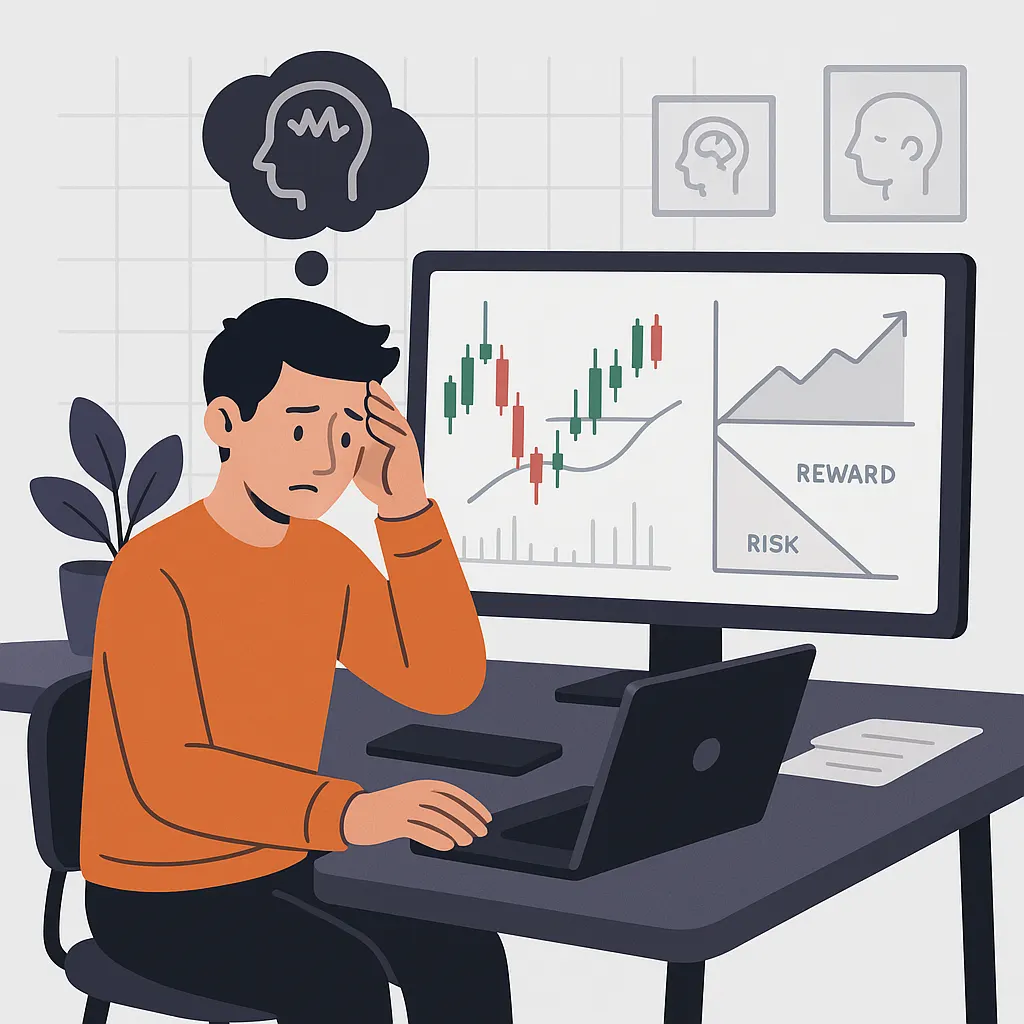
Use 5 objective filters:
Setup type (your named pattern only)
Location (key level/session high-low / VWAP area)
Trend context (higher-timeframe bias)
Trigger (specific candle/indicator event)
Risk (stop distance + spread within limits)
Rule 3: The stop-after-2 rule (anti-tilt circuit breaker)
Then, implement a hard stop. For example, if you take 2 consecutive losses, you stop trading for the session or trigger a long cooldown.
Suggested versions:
Conservative: Stop trading after -2R
Behavior-based: Stop after 2 consecutive losses
Hybrid: Stop after 2 losses OR -1.5R, whichever comes first
Rule 4: Daily loss limit (protect capital and confidence)
Next, cap the maximum damage. For example, a -2R to -3R daily loss limit often prevents the “death spiral day.”
Statistic — Source: FCA, 2024. The FCA continues to warn that CFDs are complex instruments and a high percentage of retail accounts lose money, highlighting the need for strict risk limits.
For example, daily loss caps directly limit exposure to behavioral blowups.
Rule 5: Cooldown rule (your fastest revenge-trading fix)
A cooldown rule is a forced pause after a loss (or series of trades) that prevents impulsive re-entry. This is one of the most effective ways to stop revenge trading in forex.
A scalping cooldown rule involves pausing trading for a fixed time (for example, 10–20 minutes) after a loss or two consecutive trades to prevent revenge trading.
Practical cooldown templates:
After any loss: 10 minutes flat
After 2 losses: 20 minutes + leave the screen
After a win streak (yes): 5 minutes to prevent overconfidence
For example, set a phone timer and physically stand up.
Add Structural Guardrails That Make Overtrading Hard
Structural guardrails are environment and platform changes that reduce impulsive clicking by adding friction and automation. When you rely on willpower, you eventually lose to speed.
Guardrail 1: Trade only in a defined window
First, use a narrow trading window. For example: London opens 60–90 minutes, then stops.
Suggested windows (choose one):
45 minutes (discipline rebuild mode)
90 minutes (balanced)
2 hours max (advanced only)
Next, put an alarm on your phone for the end time.
Guardrail 2: Use “one-click disable” and hotkey discipline
Next, reduce platform temptation. For example, disable one-click trading outside your window and require order confirmation popups.
Platform actions to consider:
Turn off “trade from chart” when emotional
Require two-step confirmation for market orders
Use pre-set order templates (fixed SL/TP)
Guardrail 3: Position sizing caps (remove the “make it back” lever)
Then, cap size so you can’t emotionally oversize. For example, set max risk per trade = 0.25%–0.5% during discipline recovery.
Statistic — Source: Vanguard, 2024. Vanguard’s investor research repeatedly shows that disciplined rules and constraints improve long-term outcomes compared to reactive decision-making.
For example, sizing caps are constraints that reduce reactive risk-taking.
Guardrail 4: Mandatory pre-trade checklist (no checklist, no trade)
Next, require checklist completion before entry.
A pre-trade checklist prevents impulsive entries by requiring objective confirmations (setup type, level, trigger, stop placement, and invalidation) before clicking buy or sell.
A scalping checklist that blocks impulsive trades:
Setup name: ______
Trend bias confirmed (M15/H1): Yes/No
Level identified (marked): Yes/No
Spread within limit: Yes/No (limit: ___ pips)
Entry trigger occurred: Yes/No
Stop placed at invalidation: Yes/No
Risk % within cap: Yes/No
News in next 15 min: Yes/No (If yes, no trade)
Guardrail 5: Session scorecard (process > P&L)
Finally, grade your execution. For example, a green day can still be a “bad process day” if you broke the rules.
Score each session (0–10):
Checklist completion rate
Trades taken within the window
Loss limit respected
Cooldowns respected
Forex Scalping Emotional Control You Can Train in Real Time
Forex scalping emotional control is the ability to execute your rules consistently under speed, uncertainty, and short-term P&L swings. You don’t “feel calm” first; you run a protocol that produces calm behavior.
Forex scalping emotional control improves when you measure process metrics—such as rule-break rate and checklist completion—rather than focusing only on today’s P&L.
The 30-second reset routine (between trades)
First, use a fast reset you can repeat. For example, do this after every closed trade.
Reset protocol (30 seconds):
Breathe in 4 seconds, out 6 seconds (x3)
Say: “Next trade is independent.”
Check: “Am I inside my window and rules?”
Only then scan for setups
Detach from P&L with “R thinking.”
Next, convert money into R (risk units). For example, “down $45” becomes “down -0.8R,” which feels less personal and reduces revenge impulses.
Practical habit:
You only speak in R during the session.
You review dollars after the session ends.
The “tilt triage” decision
Then, use a simple internal decision tree. For example, if you notice urgency or anger, you switch to cooldown automatically.
Tilt cues:
Faster clicking
Skipping levels
Moving stops
Tight chest / shallow breathing
Action:
If 2+ cues appear → cooldown now
Statistic — Source: NFA, 2024. The NFA continues to emphasize supervision and risk controls in retail FX activity because fast markets can drive impulsive decisions.
For example, the faster the market, the more you need pre-commitment rules.
The Entry Decision Tree (Print This)
An entry decision tree is a yes/no sequence that blocks marginal trades by requiring objective confirmations before you enter. If you can’t answer “yes” quickly, it’s not an A+ trade.
Use this on every potential entry:
Is this inside my trading window?
No → Stop
Yes → Next
Is there high-impact news within 15 minutes?
Yes → Stop
No → Next
Is this one of my named A+ setups?
No → Stop
Yes → Next
Is the spread within my limit?
No → Stop
Yes → Next
Is the stop at invalidation and risk within the cap?
No → Stop
Yes → Next
Am I below max trades and above the daily loss limit?
No → Stop
Yes → Execute (then cooldown timer starts)
For example, this tree prevents “it looks like it might go” entries because they fail step 3.

Tools & Practical Application (With Templates)
Overtrading prevention tools are checklists, timers, platform settings, and journaling templates that enforce discipline automatically. The goal is to make the right action the default action.
Tool 1: Printable “Overtrading Prevention Plan” (Rule Card)
First, create a one-page rule card and keep it visible.
Overtrading Prevention Plan (copy/paste and print):
Trading window: ______ to ______
Max trades per session: ______
Max consecutive losses: ______
Daily loss limit: ______ R
Cooldown after a loss: ______ minutes
A+ setups list (max 3): ______ / ______ / ______
Spread limit: ______ pips
If rule break happens: stop for ______ minutes and journal reason
Tool 2: Timers and alarms (free)
Next, use timers to enforce cooldowns and session stops.
Options:
Phone Clock app (iOS/Android)
Google Timer in browser
TradingView alerts for session end
Tool 3: TradingView + broker platform guardrails
Then, configure your charting and execution to reduce overclicking.
Suggested settings:
Use alerts for levels instead of staring at the price
Hide P&L during the session if possible
Disable one-click when you’re rebuilding discipline
Tool 4: Journal template + the metrics that reveal overtrading
Next, add fields that expose behavior. For example, you can’t fix what you don’t measure.
Minimum journal fields (fast to fill):
Setup name
Time of day
Screenshot link
Checklist passed (Y/N)
Emotion tag (calm/bored/rushed/angry)
Rule broken (if any)
Result in R
Notes (1 sentence)
Key discipline metrics (track weekly):
Metric: What it reveals: Target: Trades per session Overactivity Stable and planned Rule-break rate (%)Discipline<10%, then <5%Checklist completion (%)Impulsivity>90%Avg R per tradeQualityRising over time“Time to first rule break” Trigger timing Increasing
Statistic — Source: CFTC, 2024. The CFTC’s customer advisories repeatedly stress documenting risk and decisions because leverage magnifies mistakes.
For example, journaling is documentation that directly reduces repeat errors.
Mini case study: Before vs after one week
Finally, here’s what a realistic “discipline rebuild” week can look like.
Before (Week A):
Trades: 92
Rule breaks: 31 (34%)
Net result: -6.4R
Notes: revenge trading after first loss, no cooldowns
After (Week B) with rules + cooldown:
Trades: 38
Rule breaks: 3 (8%)
Net result: +1.2R
Notes: fewer entries, higher A+ concentration, stopped at -2R once
For example, the improvement came more from removing bad trades than “finding better indicators.”
What’s Next: A 7-Day Plan to Stop Overtrading (Without Quitting)
A 7-day plan to stop overtrading is a short, structured reset that reduces trade frequency while building repeatable process habits. You’ll trade less, but you won’t stop learning.
Day 1: Baseline your behavior
First, record:
Trades/session
Rule breaks
Largest loss sequence
Emotional triggers
Day 2: Set your hard limits (non-negotiable)
Next, choose:
Max trades/session
Daily loss limit
Cooldown rule
Stop-after-2 rule
Day 3: Define A+ setups (only 1–3)
Then, list your A+ setups and write the checklist. For example, “break-and-retest at London high with M15 bias.”
Day 4: Install guardrails in your platform
Next, add:
Alerts at levels
One-click disable (when possible)
Preset orders with SL/TP
Day 5: Trade one short window only
Then, trade 45–90 minutes and stop no matter what. For example, stopping while “up” is training, not missing out.
Day 6: Review with a post-trade checklist
Next, grade your process and identify the top trigger.
Day 7: Tighten one rule and repeat
Finally, reduce one failure point. For example, if you broke rules after loss #1, increase the cooldown from 10 to 20 minutes.
Success metrics by day 7:
Trades/session reduced by 30–60%
Rule-break rate under 10%
Checklist completion over 90%
“Time to first rule break” increased
Conclusion
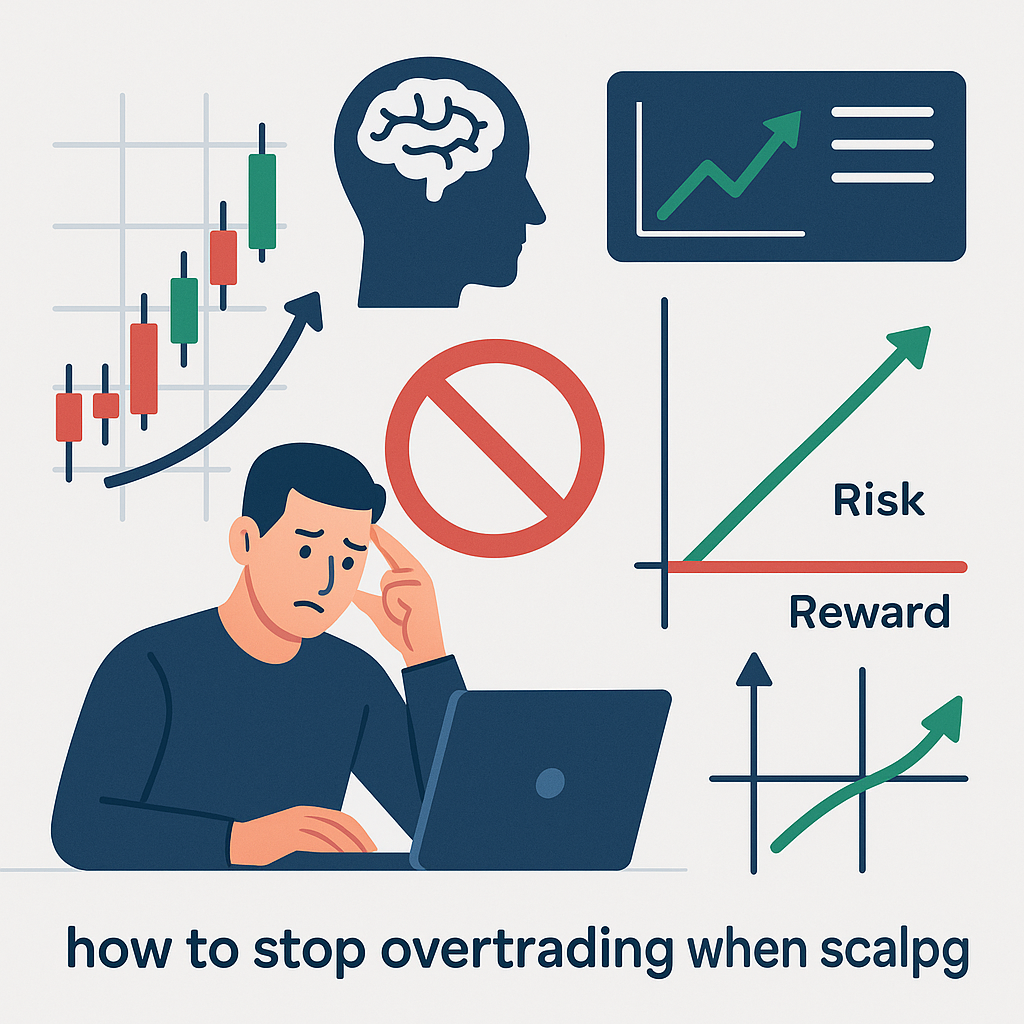
How to stop overtrading when scalping is a process of installing rules, guardrails, and emotional reset routines that prevent impulsive entries before they happen. When you cap trades, enforce cooldowns, and trade only A+ setups, you protect expectancy and your mindset. Most importantly, you build the consistency that makes scalping sustainable.
Diagnose Your #1 Trading Mistake — Free
Answer 10 diagnostic questions and instantly find out which trading mistake is costing you the most — with a personalised 3-page correction plan PDF.
- Identifies your primary trading mistake
- Personalised 4-step correction plan
- 3-page PDF emailed to you free
What you'll discover:
-
Revenge Trading
Are you chasing losses?
-
Overtrading
Too many trades per day?
-
Emotional Trading
Feelings overriding logic?
Free. No sign-up required. PDF sent to your email.