 TradeWinGuide
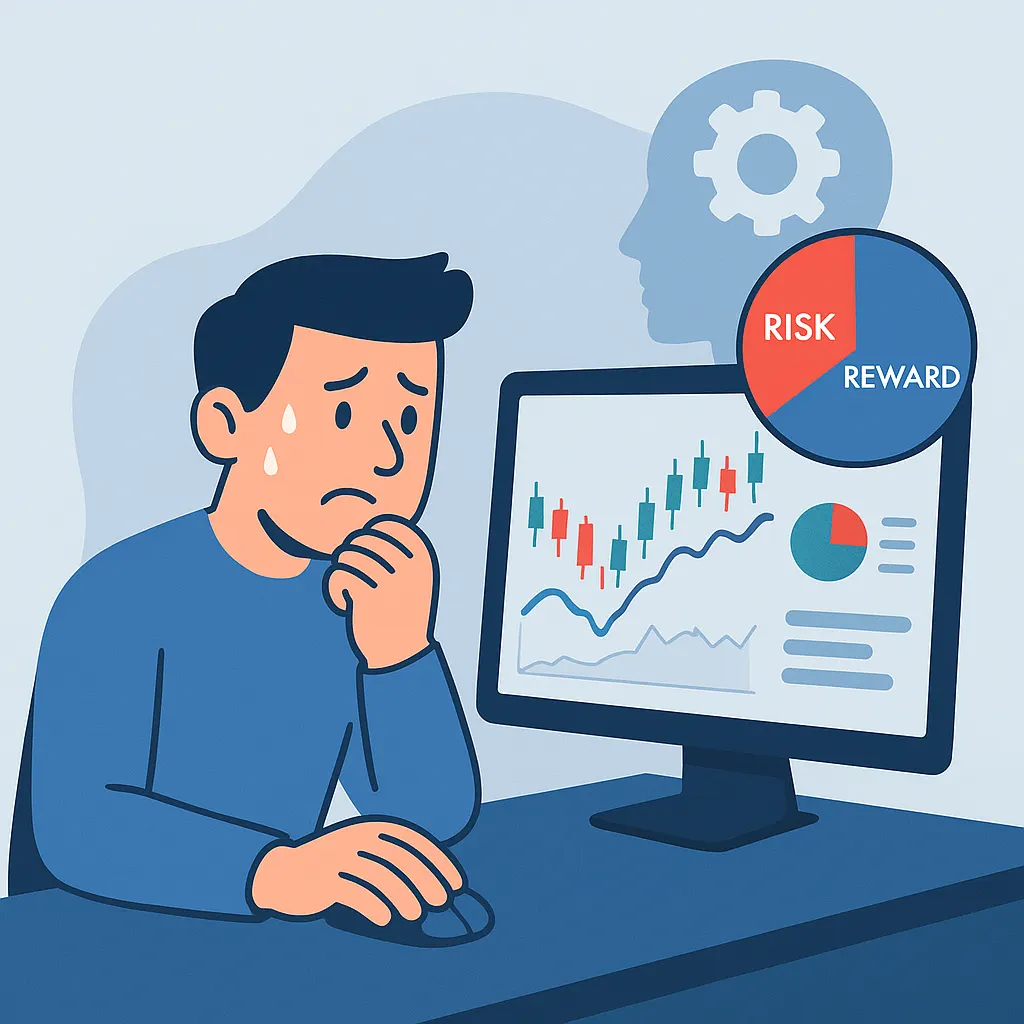
You already know the feeling of overtrading in binary options: you open a chart “just to check,” and suddenly you’ve taken five trades in ten minutes. What most traders miss is the gap between intention and structure—you can’t “try harder” into discipline on 30‑second candles. In this guide, you’ll install a rule-based system that reduces impulsive entries, protects your account, and improves consistency.
Key takeaways (save this)
Overtrading in binary options is placing more trades than your tested strategy and risk limits allow, usually driven by emotion rather than rules.
A trade frequency cap reduces impulsive entries by forcing you to wait for only pre-defined “A+” setups.
A daily loss limit and cooldown rule prevent revenge trading by stopping the session after specific drawdown triggers.
A pre-trade checklist improves discipline by requiring objective conditions (trend, level, timing, payout, news filter) before entry.
A structured trading journal exposes patterns like boredom trading and signal hopping so you can remove the real causes.
A weekly review routine improves results by measuring process metrics (rule adherence and setup quality) instead of chasing win rate.
What is overtrading in binary options?
Overtrading in binary options is placing trades more frequently than your written strategy and risk limits allow, typically in response to emotions like FOMO, boredom, or frustration.
First, overtrading shows up as too many trades binary options traders take in a short window, often after one loss or one win. For example, you lose one 1‑minute trade and immediately “double tap” two more entries without a setup.
Next, binary options amplify overtrading because outcomes resolve fast, so your brain gets quick reward/punishment loops. For example, a 60‑second expiry can trigger revenge trading in binary options before you’ve even reviewed the last chart.
Finally, overtrading can also mean trading outside your edge, not just high volume. For example, you normally trade pullbacks at support, but you start taking random mid‑range candles because you feel “behind.”
Statistic — Source: Adults make faster, more impulsive choices under time pressure and stress—Source: American Psychological Association, 2023.
Statistic — Source: Trading is frequently linked to addictive-like reward loops in high-frequency environments—Source: UK Financial Conduct Authority (FCA) consumer research on investing behaviors, 2023.
Why overtrading in binary options matters
Overtrading matters because it collapses your expectancy by increasing low-quality entries while compounding fees, slippage, and emotional decision fatigue.
To start, overtrading erodes capital through small repeated losses that feel harmless individually. For example, ten 1% losses in a session is a 10% drawdown before you’ve even adjusted.
Then, overtrading increases decision fatigue, which degrades rule-following over time. For example, your first two trades follow your plan, but trade #9 becomes a “maybe” entry that you justify.
Also, binary options add platform friction like spreads embedded in payout, lower-than-1:1 payouts, and execution constraints. For example, a 55% win rate can still lose money if the payout is only 70%.
Statistic — Source: Typical fixed-odds retail payout structures often sit below 100% return on winners, making selectivity critical—Source: academic reviews of retail derivative product design, CFA Institute research summaries, 2022.
Statistic — Source: Decision fatigue reduces self-control and increases impulsive choices—Source: National Institutes of Health (NIH) behavioral science summaries, 2022.
How to stop overtrading in binary options: a rules-based discipline system
A rules-based discipline system is a written set of entry filters, trade caps, stop-trading triggers, and routines that prevents impulsive trades by making “no trade” the default.
Build your “A/B/C setups only” filter
A+ setups are the small subset of trade conditions that historically perform best in your testing, and they should be the only trades you allow when fixing overtrading.
First, define A+ using objective criteria you can screenshot and repeat. For example, “trend aligned + level touch + rejection candle + payout ≥ 80% + no red news.”
Next, define B setups as optional and only tradable after you’re stable. For example, “trend aligned + level nearby, but candle signal is weak,” which you journal but don’t take this week.
Then, define C setups as banned during recovery. For example, “mid-range entries, random indicator crosses, or trades taken because a Telegram signal popped up.”
Statistic — Source: Retail traders tend to underperform when they increase activity and reduce selectivity—Source: OECD retail investing behavior review, 2023.
Install a pre-trade checklist (non-negotiable)
A pre-trade checklist involves verifying objective conditions (setup type, trend/level alignment, timing, payout threshold, and news filter) before any entry is allowed.
First, print the checklist and keep it visible during every session. For example, you do not click “Buy” until all boxes are checked.
Next, keep the checklist short enough to use in seconds. For example, a 7-item checklist takes 10–20 seconds and still blocks impulsive trades.
Pre-trade checklist for binary options (copy/paste):
Setup type: Is this an A+ setup (yes/no)?
Trend: Is price aligned with your trend rule (yes/no)?
Level: Is entry at a defined level (S/R, VWAP band, pivot) (yes/no)?
Timing: Is this within your approved session window (yes/no)?
Payout: Is payout ≥ your minimum (yes/no)?
News: Is there no high-impact news within X minutes (yes/no)?
Risk: Is this within daily loss and trade caps (yes/no)?
Statistic — Source: Checklist use improves compliance in high-stakes decision environments—Source: World Health Organization checklist evidence summaries, 2022.
Set trade frequency caps (your core anti-overtrading lever)
A trade frequency cap is a pre-set maximum number of trades per session or day that forces selectivity and reduces impulsive entries.
First, choose a cap you can follow under stress. For example, start with 6 trades per day or 3 trades per session.
Next, tie the cap to your setup frequency, not your desire to “make money today.” For example, if your A+ setup appears 3–7 times daily, your cap should match that reality.
Then, lock the cap with a hard stop: when you hit it, you stop trading. For example, you close the platform and switch to journaling screenshots only.
How many trades per day is “too many” for binary options?
Too many trades is any number above your tested setup frequency and risk limits, but most recovering traders should cap at 3–8 trades per day.
For example, if you take 25 trades/day on 1‑minute charts, you’re likely trading boredom and noise, not edge.
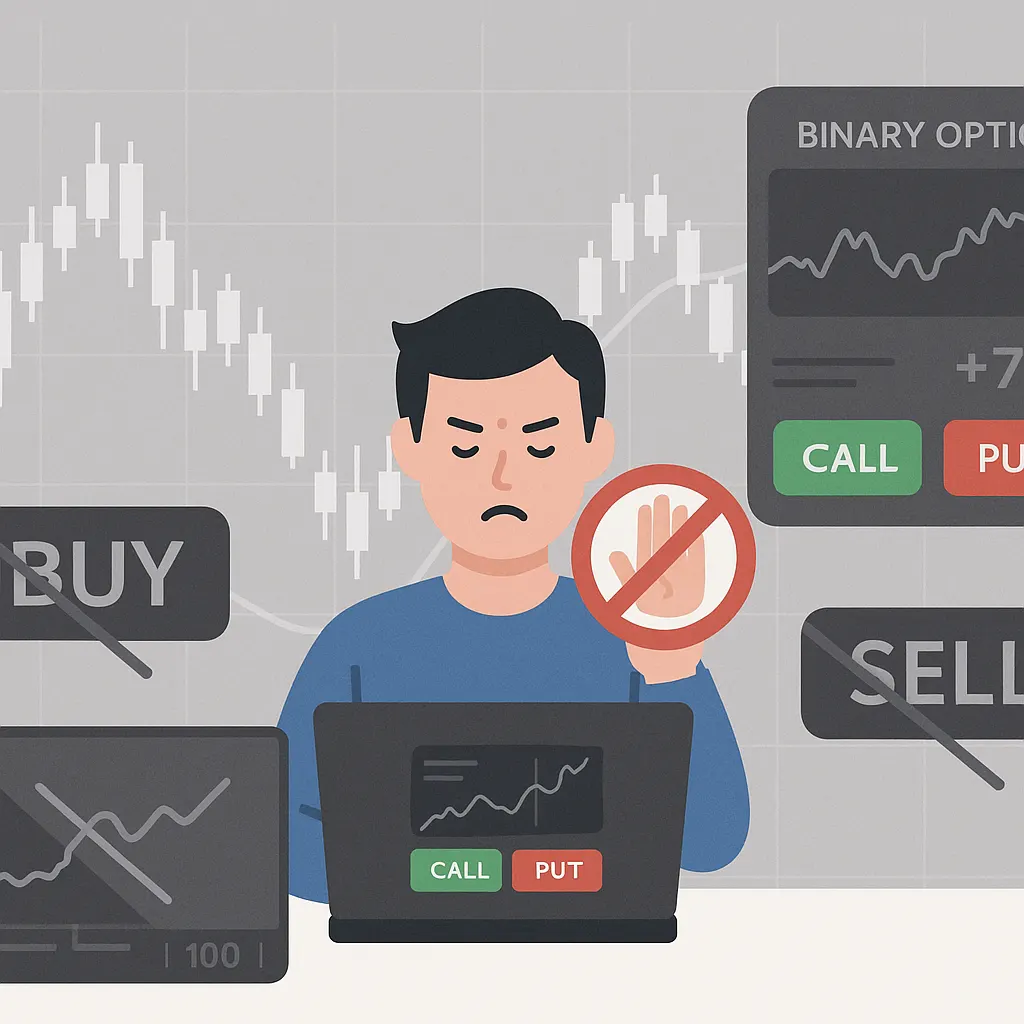
Add cooldown rules (stops revenge spirals fast)
A cooldown rule is a mandatory break after a trigger (loss streak, rule break, or emotional spike) that blocks immediate re-entry.
First, cool down after two losses in a row. For example, you step away for 15 minutes, then re-check your checklist.
Next, cool down after any rule violation, even if you won. For example, if you entered without confirming payout, you stop for 30 minutes and log it.
Then, cool down after a big win, because euphoria also fuels overtrading. For example, after a 3-win streak, you pause and protect your discipline.
Statistic — Source: Loss chasing is a known driver of risky financial behavior—Source: Financial Conduct Authority (FCA), 2023.
Risk management controls that prevent too many trades
Binary options risk management rules are preset limits for risk-per-trade, daily drawdown, and stop-trading triggers that keep you from “trading to feel better.”
Use fixed risk per trade (simple and enforceable)
Fixed risk per trade is risking the same small percentage of your account on every entry to stabilize outcomes and reduce emotional swings.
First, pick a risk you can survive during a bad week. For example, 0.5%–1.0% per trade is a common discipline range for short expiries.
Next, avoid “bet sizing” after losses because it creates a martingale spiral. For example, if you lose $10, you do not jump to $25 to “get it back.”
Set a daily loss limit (the revenge-trading firewall)
A daily loss limit involves stopping trading for the day once you hit a defined drawdown threshold, preventing revenge trades from compounding losses.
First, set the limit as a percentage, not a dollar amount. For example, stop at -3% per day while rebuilding discipline.
Next, make the stop automatic in your behavior, even if the platform can’t enforce it. For example, you withdraw your login or use a site blocker after the limit.
Then, pair the loss limit with a required review. For example, after hitting -3%, you only journal, tag triggers, and screenshot charts.
Statistic — Source: Most retail traders lose money in leveraged/derivative-style products, making strict loss limits essential—Source: ESMA risk warnings and national regulator summaries, 2023.
Add stop-trading triggers (objective, not emotional)
Stop-trading triggers are objective conditions that end your session regardless of how you feel.
First, stop after a loss streak threshold. For example, stop after 3 losses total or 2 consecutive losses.
Next, stop after a rule-break. For example, if you traded through high-impact news, you end the session immediately.
Then, stop after time-in-seat. For example, you trade only one 60-minute session and quit even if you feel “close.”
Statistic — Source: Longer screen time increases impulsive responding in digital decision tasks—Source: Nature portfolio digital behavior studies, 2022.
Common causes of overtrading (and the specific fix for each)
Common causes of overtrading are predictable emotional and structural triggers—FOMO, revenge, boredom, “make it back” thinking, lack of edge, and missing limits.
Fix FOMO with a “next setup” rule
FOMO is the fear of missing a move that pushes you into late, low-quality entries.
First, label the behavior in real time. For example, you say, “This is FOMO,” before you touch the trade button.
Next, use a next setup script. For example, “If it’s real, another A+ setup will appear today.”
Then, enforce a re-entry condition. For example, you only trade at your level, not mid-candle.
Fix revenge trading with cooldown + loss limit pairing
Revenge trading is trying to recover a loss quickly by increasing frequency or risk.
First, treat revenge as a trigger, not a moral failure. For example, your heart rate spikes after a loss, so your system forces a pause.
Next, use the paired control. For example, two losses → 15-minute cooldown, and -3% day → stop.
Then, rewrite the goal. For example, your goal becomes “follow the plan perfectly,” not “end green.”
Fix boredom trading with scheduled “no-trade” blocks
Boredom trading is placing trades to create stimulation, not because a setup is present.
First, add a timer to your routine. For example, you only evaluate charts on the close of each candle, not continuously.
Next, schedule “no-trade blocks.” For example, you journal for 10 minutes after every trade regardless of outcome.
Then, reduce chart count. For example, you trade one asset only to prevent scanning-induced impulses.
Statistic — Source: Multitasking and frequent task switching increases errors and impulsive choices—Source: APA cognitive load summaries, 2023.
Fix “make it back” mindset with a process score
The “make it back” mindset is anchoring on P&L and trying to force recovery today.
First, replace P&L with a process score. For example, you score each trade 0–5 based on checklist compliance.
Next, make the score your win condition. For example, “I win today if I average 4.5/5,” even if P&L is flat.
Then, review weekly, not hourly. For example, you only judge performance after 20–50 trades.
Fix lack of edge with a pause-and-test rule
Lack of edge is trading a strategy that has not demonstrated positive expectancy in your own sample.
First, stop live trading when you can’t define your A+ setup. For example, if you can’t write entry rules in one paragraph, you don’t have an edge yet.
Next, backtest one setup only. For example, you test “trend pullback at S/R” across 100 examples.
Then, trade small after proof. For example, you go live at 0.5% risk only after your test shows stability.
Statistic — Source: Many retail traders rely on untested signals and underperform—Source: BIS retail trading and market structure commentary, 2022.
The one-page binary options anti-overtrading plan (template)
A one-page trading plan is a single document that defines exactly when you can trade, how much you can trade, and when you must stop.
First, copy this into Notes or Google Docs and print it. For example, you sign it like a contract.
One-page plan (fill in the blanks)
Market/asset: ________
Timeframe/expiry: ________
Session window: ________ (e.g., 9:00–10:00 ET)
A+ setup definition: ________ (3–5 objective conditions)
Minimum payout: ________%
News filter: No high-impact news within ________ minutes
Risk rules
Risk per trade: ________% (start 0.5–1.0%)
Max trades/day: ________ (start 6)
Max trades/session: ________ (start 3)
Daily loss limit: ________% (start 3%)
Cooldown: After ________ consecutive losses → ________ minutes
Stop-trading triggers
Rule violation = stop for the day (yes/no): ________
Loss streak threshold: ________
Time cap: ________ minutes total screen time
Process tracking
Checklist compliance target: ________/7
Screenshot every trade (yes/no): ________
Weekly review day/time: ________
Tools & practical templates (journal, trackers, timers, settings)
Tools to stop overtrading are simple external guardrails—journals, timers, blockers, and templates—that remove reliance on willpower.
Trade journal fields (binary options specific)
A binary options trading journal template is a structured log that captures setup quality, rule adherence, and emotional triggers so you can remove the real cause of overtrading.
First, log “process” fields, not just outcomes. For example, a win taken off-plan is still a failure for discipline.
Next, add fast tags you can filter later. For example, tag each trade as FOMO, boredom, revenge, or A+.
Journal fields to copy:
Date / time
Asset
Expiry / timeframe
Setup grade (A/B/C)
Checklist score (0–7)
Trend + level notes (1 sentence)
Payout %
Result (W/L)
Emotion before/after (1–2 words)
Trigger tag (FOMO/revenge/boredom/none)
Screenshot link
Statistic — Source: Written self-monitoring improves habit change adherence—Source: NIH behavior change technique reviews, 2022.
Screenshot logging (fast pattern detection)
Screenshot logging is saving a before/after chart image for every trade to make your mistakes obvious and repeatable to fix.
First, screenshot at entry and at expiry. For example, you store them in a dated folder called “Week 1 Discipline.”
Next, annotate one sentence only. For example, “Entered mid-range = boredom trade.”
Habit tracker (discipline over outcomes)
A habit tracker is a simple yes/no scoreboard for rule adherence that turns discipline into a measurable target.
First, track just 5 habits to start. For example: “Max trades respected,” “Checklist used,” “Cooldown respected,” “Stop-loss day respected,” “Screenshots saved.”
Next, score daily and review weekly. For example, aim for 90% compliance before increasing trade count.
Timers and alarms (anti-churn protection)
Timers are external brakes that interrupt impulsive rapid-fire entries.
First, use a phone timer for cooldowns. For example, set 15 minutes immediately after the second consecutive loss.
Next, use a session alarm. For example, a 60-minute timer ends your trading window automatically.
Free tools you can use:
Google Calendar (session blocks)
iPhone/Android Clock (cooldowns)
Notion or Google Sheets (journal + habit tracker)
TradingView (levels + alerts, if compatible with your workflow)
Platform settings and friction (make bad behavior harder)
Friction is adding small obstacles that prevent impulsive entries.
First, remove “one-click trade” if your platform allows. For example, require confirmation to place an order.
Next, hide the P&L panel during the session. For example, you only check results at the end of the hour.
Then, reduce watchlist size. For example, trade one asset to stop signal hopping.
What’s next: a 7-day implementation plan
A 7-day implementation plan is a short, structured sprint that installs your rules, tracks compliance, and proves you can trade fewer, better setups.
Day 1: Baseline and trigger audit
A baseline audit is recording your current trade count, rule breaks, and emotional triggers for one session without changing anything.
First, log every trade and tag triggers. For example, you discover 40% of trades came after one loss.
Day 2: Write your one-page plan + A/B/C setups
A one-page plan is a single-page ruleset you can follow under stress.
Next, define one A+ setup and ban B/C. For example, you only trade trend + level + rejection.
Day 3: Add the checklist + screenshot rule
A checklist rule is requiring objective confirmation before entry.
Then, screenshot every trade and score it. For example, you refuse trades that score below 6/7.
Day 4: Add trade caps
Trade caps are hard limits that reduce impulsive entries.
Next, set max 3 trades per session. For example, after trade #3 you stop, even if you feel “warm.”
Day 5: Add daily loss limit + cooldowns
A daily loss limit is stopping at a preset drawdown to prevent spirals.
Then, enforce two-loss cooldowns. For example, two losses means 15 minutes off charts.
Day 6: Do a mid-sprint review
A mid-sprint review is checking process metrics, not P&L, to find the real leak.
Next, calculate compliance rate. For example, you aim for ≥90% on caps and cooldowns.
Day 7: Lock the system and simplify further
Locking the system is keeping the rules that worked and removing any remaining temptation triggers.
Finally, reduce variables again. For example, one asset, one session, one A+ setup for another week.
Metrics to track (the only ones that matter this week):
Trades/day (target: down)
A+ percentage (target: up)
Checklist compliance (target: ≥90%)
Rule breaks (target: 0)
Revenge/FOMO tags (target: down)
Statistic — Source: Process-based goals improve adherence compared with outcome-only goals—Source: American Psychological Association goal-setting summaries, 2023.
Conclusion
Stopping overtrading in binary options is building a system that limits decisions, enforces selectivity, and protects your downside automatically.
Finally, your edge shows up when you trade less, not more. For example, taking 4 A+ trades with full compliance usually beats 25 impulse trades fueled by noise.
Next, protect your capital like it’s inventory for your business. For example, a strict daily loss limit keeps you alive long enough to learn and improve.
Written by TradeWinGuide Editorial, TradeWinGuide Editorial Team — Expert in binary options trading, financial market analysis, and trading psychology.
Reviewed by TradeWinGuide Research Team — Specialists in trading strategy validation and risk management.
Disclaimer: This article was initially drafted using AI assistance. However, the content has undergone thorough revisions, editing, and fact-checking by human editors and subject matter experts to ensure accuracy.
Diagnose Your #1 Trading Mistake — Free
Answer 10 diagnostic questions and instantly find out which trading mistake is costing you the most — with a personalised 3-page correction plan PDF.
- Identifies your primary trading mistake
- Personalised 4-step correction plan
- 3-page PDF emailed to you free
What you'll discover:
-
Revenge Trading
Are you chasing losses?
-
Overtrading
Too many trades per day?
-
Emotional Trading
Feelings overriding logic?
Free. No sign-up required. PDF sent to your email.