 TradeWinGuide

You already know day trading can look simple: buy, sell, repeat—sometimes in minutes. What most beginners miss is that consistent results come less from “the perfect strategy” and more from risk rules, execution, and psychology. This guide teaches day trading basics, a beginner-safe process, and the mindset and controls used in real Day Trading for Beginners.
Key Takeaways (Beginner-Safe Summary)
Day trading is opening and closing positions within the same trading day to avoid overnight risk.
Risk management drives survival because small losses recover faster than big drawdowns.
Beginner setups (pullbacks, ranges, breakouts) work best with clear invalidation points.
Trading psychology impacts execution because emotions cause rule-breaking and overtrading.
A structured process standardizes selection, sizing, entries, exits, and review.
Paper trading and journaling build feedback loops before you risk real money.
What is Day Trading?
Day trading is the practice of buying and selling a financial instrument within the same trading day, with no positions held overnight.
Additionally, day traders aim to capture short-term price moves using liquid markets like stocks, forex, and crypto.
For example, you might buy a stock at 10:05 a.m. and sell it at 10:37 a.m. for a small gain or controlled loss.
Next, day trading differs from swing trading because swing traders typically hold positions for days to weeks.
In contrast, day traders close out before the market day ends to reduce overnight gap risk.
For example, a swing trader might hold a trend for seven days, while a day trader may trade three intraday pullbacks.
Finally, day trading also differs from long-term investing because investors focus on fundamentals and multi-year horizons.
Instead, day traders focus on execution, liquidity, and volatility in shorter windows.
For example, an investor may buy an index fund monthly, while a day trader may trade one morning session only.
Notably, U.S. equities have specific regulatory constraints for frequent day trading.
The U.S. Pattern Day Trader (PDT) rule generally applies to margin accounts that execute four or more day trades in five business days, requiring a minimum equity level set by regulators and brokers.
For example, if you place four same-day round trips in a week in a U.S. margin account, your broker may flag you as PDT.
Statistic — Source: FINRA, 2024 (Pattern Day Trader rule guidance and thresholds).
Statistic — Source: SEC, 2023 (Retail trading and investor education resources on trading risks).
Statistic — Source: BIS, 2022 (FX market structure and liquidity context for major pairs).
Why Day Trading Matters
Day trading is a high-skill form of active trading where costs, speed, and discipline matter more than opinions.
Moreover, it matters because the same volatility that creates opportunity can also create fast losses.
For example, a 1% move against you on leverage can exceed your planned risk quickly.
Additionally, day trading is hard because it compresses decision-making into minutes.
In practice, you must manage entries, exits, sizing, and emotions under time pressure.
For example, a sudden news spike can trigger FOMO, then a rushed entry, then a larger-than-planned loss.
Further, day trading requires consistent time availability.
In reality, you need to be present for your chosen session, plus prep and review.
For example, a U.S. stock trader may focus on 9:30–11:00 a.m. ET and journal after lunch.
Also, day trading has friction costs that beginners underestimate.
Specifically, spreads, fees, commissions, and slippage can turn a “good idea” into a net loser.
For example, if you target $20 profit but pay $6 in fees and lose $18 to slippage, your edge disappears.
Finally, psychology matters because your brain treats trading like a threat-and-reward loop.
In effect, stress can push you to overtrade, move stops, or skip your plan.
For example, after two losses, you may double size “to get it back,” which often creates the biggest drawdown.
Statistic — Source: ESMA, 2023 (CFD retail account loss rates; frequently 70%+ lose money).
Statistic — Source: FCA, 2023 (Retail CFD profitability disclosures; majority of accounts lose).
Statistic — Source: FINRA, 2024 (PDT rule impacts for U.S. equity margin accounts).
Statistic — Source: S&P Dow Jones Indices, 2023 (SPIVA underperformance context for active approaches vs benchmarks).
Day Trading Basics for Beginners: Core Concepts You Must Know
Day trading basics for beginners are the minimum concepts you need to place trades with controlled risk.
Next, these basics include liquidity, spreads, slippage, volatility, order types, and leverage.
For example, a perfect chart setup can still fail if the spread is wide and the fill is poor.
Liquidity, Volume, and Why “Easy In/Out” Matters
Liquidity is the ability to enter and exit quickly without moving price.
Moreover, liquidity usually improves when volume is high and the order book is deep.
For example, EUR/USD is typically more liquid than an obscure altcoin pair.
Additionally, volume is the number of shares/contracts traded in a period.
In practice, higher volume often means tighter spreads and less slippage.
For example, a stock trading 20 million shares daily is usually easier than one trading 200,000.
Statistic — Source: BIS, 2022 (FX market turnover and liquidity concentration).
Spreads and Slippage (The “Hidden Cost” Beginners Miss)
Spreads are the difference between the bid and ask price.
Furthermore, slippage is the gap between your expected fill and actual fill.
For example, you may click buy at $10.00 but fill at $10.03 during a fast breakout.
Also, spreads and slippage increase when volatility spikes.
As a result, your stop-loss can trigger at a worse price than planned.
For example, during a news release, a crypto pair might widen from 0.02% to 0.30%.
Volatility: Opportunity and Risk in One Number
Volatility is how much price moves over a given time.
Consequently, higher volatility can offer bigger moves but demands smaller size.
For example, if a coin moves 3% in five minutes, a tight stop may be too close.
Order Types: Market vs Limit vs Stop
Order types are instructions you give to your broker/exchange for execution.
Specifically, market orders prioritize speed, while limit orders prioritize price.
For example, a market order may fill instantly but with slippage, while a limit order may miss.
Also, stop orders trigger when price hits a level, often used for stop-losses.
In practice, a stop-market ensures an exit, while a stop-limit controls price but risks not filling.
For example, in a sharp drop, a stop-limit might not execute, leaving you exposed.
Leverage and Margin: Powerful, Expensive, and Unforgiving
Leverage is borrowed exposure that magnifies gains and losses.
Therefore, leverage is not a strategy; it is a risk multiplier.
For example, 10× leverage turns a 1% move into about a 10% account impact before fees.
Margin is collateral you post to hold leveraged positions.
Moreover, margin rules can cause liquidation or margin calls during volatility.
For example, a fast wick can liquidate a high-leverage position even if price later recovers.
Statistic — Source: ESMA, 2023 (Retail leverage risk disclosures and loss rates).
Statistic — Source: FCA, 2023 (Retail trading loss disclosures for leveraged products).
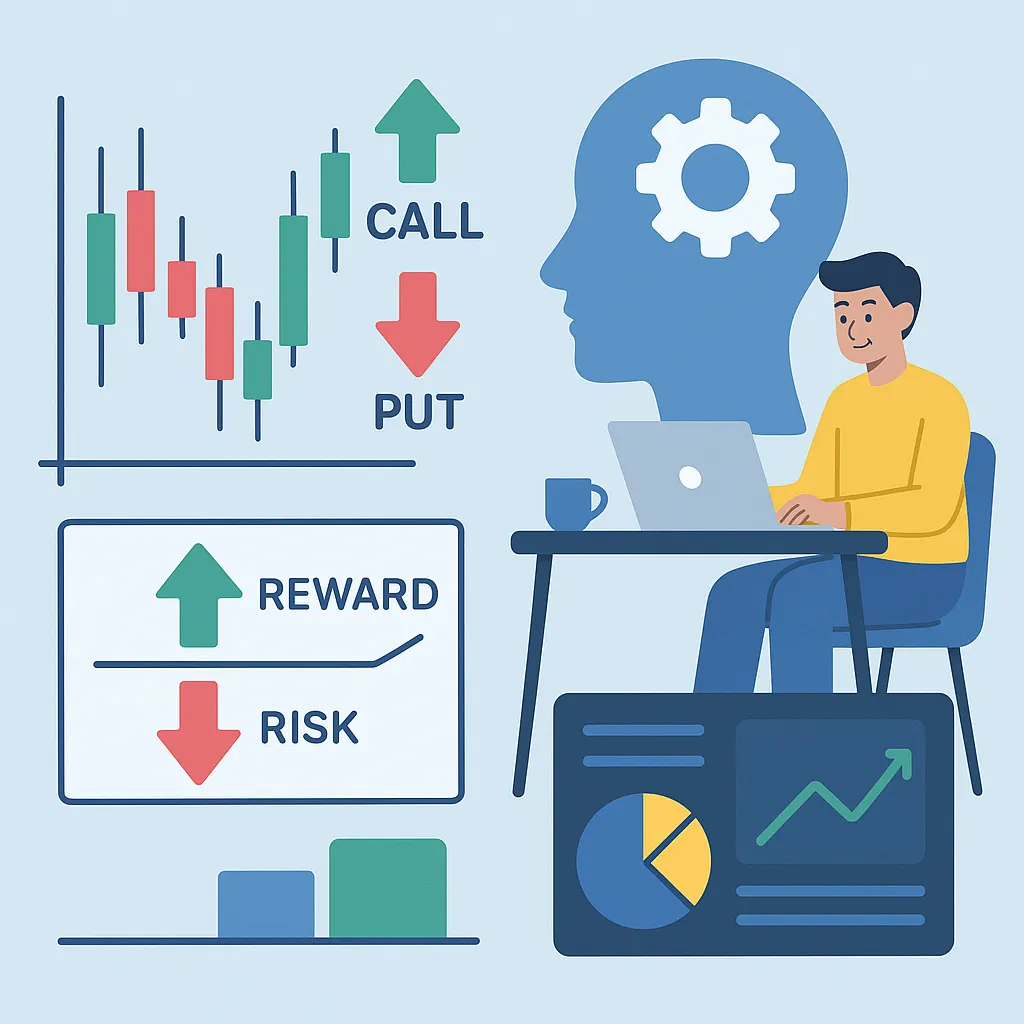
How to Day Trade for Beginners Step by Step (A Simple Process)
A day trading process is a repeatable workflow that standardizes decisions and reduces emotional errors.
Additionally, a day trading plan involves defined entry criteria, a pre-set stop-loss, a profit-taking rule, and a post-trade review process recorded in a trading journal.
For example, your plan might require “trend + pullback to VWAP + confirmation candle,” with a fixed stop and 2R target.
Step 1: Choose One Market and One Session
Market selection is choosing where you will trade based on liquidity, costs, and schedule fit.
Moreover, beginners usually improve faster by focusing on one market and one session.
For example, you can trade only U.S. large-cap stocks from 9:30–11:00 a.m. ET.
Also, your best market depends on your constraints.
In practice, stocks have PDT limits in the U.S., forex has 24/5 liquidity, and crypto trades 24/7.
For example, if you work nights, crypto may fit your hours but requires stricter volatility controls.
Step 2: Define Your “A+ Setup” and Avoid Everything Else
A setup is a specific pattern and context that gives you a repeatable trade idea.
Next, beginners should trade fewer patterns, not more patterns.
For example, you might trade only trend pullbacks and skip all breakouts for a month.
Also, you must define when you will not trade.
Specifically, you can avoid major news minutes, low-volume midday, or choppy ranges.
For example, you might stop trading 10 minutes before and after CPI releases.
Step 3: Plan the Trade Before You Click (Entry, Stop, Target)
Trade planning is writing down your entry trigger, invalidation point, and profit-taking rule.
Moreover, planning first prevents impulsive clicks.
For example, “Buy above the pullback high; stop below pullback low; target 2R or trail.”
Step 4: Size the Position From the Stop-Loss
Position sizing is calculating how many shares/contracts to trade based on your stop-loss distance and the maximum amount you’re willing to lose on a single trade.
Therefore, you size with math, not confidence.
For example, if you risk $10 and your stop is $0.20 away, you can trade 50 shares ($10 ÷ $0.20).
Step 5: Execute With One Job: Follow the Rules
Execution is placing the trade exactly as planned without improvising mid-trade.
Additionally, your main job is to not move the stop unless your plan allows it.
For example, you can trail a stop only after price reaches 1R, not before.
Step 6: Exit, Then Review (Win or Lose)
Review is measuring whether you followed your rules and whether the setup performed as expected.
Moreover, journaling turns trades into data instead of drama.
For example, you can record your screenshot, entry/exit, R-multiple, and a rule-score.
Statistic — Source: SEC, 2023 (Investor education on trading risks and planning).
Statistic — Source: FINRA, 2024 (PDT rule and day-trading activity definitions).
Best Day Trading Strategies for Beginners (With “When to Avoid” Notes)
Beginner day trading strategies are simple, rule-based setups that prioritize clear invalidation points.
Moreover, the goal is not to predict; the goal is to execute a repeatable edge.
For example, you can trade the same pullback pattern 30 times and evaluate outcomes.
Strategy 1: Trend Pullback (Beginner-Friendly and Structured)
A trend pullback strategy is trading in the trend direction after price retraces to a key level.
Additionally, this works best when the market shows higher highs/higher lows (uptrend) or lower lows/lower highs (downtrend).
For example, in an uptrend, you wait for a pullback to VWAP or a moving average, then enter on a bullish confirmation candle.
Also, you should avoid pullbacks in a flat, whipsaw market.
Specifically, choppy conditions cause repeated fake signals and stop-outs.
For example, if price crosses VWAP five times in 20 minutes, you skip.
Strategy 2: Range Bounce (Clear Risk, Quick Feedback)
A range bounce strategy is buying support and selling resistance within a defined sideways range.
Moreover, ranges offer obvious stop placement just beyond the range boundary.
For example, if a stock bounces between $49.80 and $50.20, you buy near $49.85 with a stop at $49.75.
Also, you should avoid range bounces right before major news.
In practice, news often breaks ranges with slippage.
For example, an earnings headline can gap price through your stop.
Strategy 3: Breakout (High Reward, Higher Beginner Error Rate)
A breakout strategy is entering when price moves beyond a defined level with expanding volume.
Furthermore, breakouts work best when volatility is contracting before expansion.
For example, you buy when price clears premarket high with a volume surge and holds above the level.
Also, you should avoid breakouts without volume or with extended candles.
Specifically, late entries often become “buying the top” of a short-term move.
For example, if the breakout candle is already 2× the average range, you wait for a pullback.
Statistic — Source: Nasdaq, 2024 (Market microstructure education on liquidity/spreads for equities).
Statistic — Source: BIS, 2022 (FX liquidity concentration supporting major-pair strategy selection).
Statistic — Source: ESMA, 2023 (Retail leveraged-product risk context for breakout slippage and gaps).
Day Trading Risk Management Rules for Beginners (Non‑Negotiables)
Day trading risk management is the set of rules that limits losses so you can survive long enough to learn.
Moreover, risk control matters because drawdowns compound negatively and require larger returns to recover.
For example, a 50% drawdown requires a 100% gain to break even, so you must avoid big hits.
Rule 1: Risk a Small, Fixed Amount Per Trade
Fixed risk per trade is choosing a consistent dollar amount (or small percent) you can lose per trade.
Additionally, beginners often start with 0.25%–1.0% per trade depending on volatility and experience.
For example, with a $2,000 account, risking 0.5% means a maximum of $10 per trade.
Rule 2: Place the Stop-Loss Where Your Idea Is Wrong
Stop-loss placement is choosing the price level that invalidates your setup, not a random number.
Furthermore, the stop must be far enough to avoid noise but close enough to control loss.
For example, in a pullback, a stop below the pullback low makes more sense than “10 cents.”
Rule 3: Use R:R (Risk-to-Reward) and Track R-Multiples
Risk-to-reward is the relationship between what you risk and what you aim to make.
Consequently, you can be profitable with a lower win rate if your average win is larger than your average loss.
For example, risking $10 to make $20 is a 1:2 R:R, and one win can cover two losses.
Rule 4: Set a Max Daily Loss and a Hard Stop Time
A max daily loss rule is a pre-set limit where you stop trading for the day.
Moreover, this prevents emotional spirals and “death by a thousand cuts.”
For example, you may stop after -2R on the day or after two consecutive rule-breaks.
Rule 5: Avoid Leverage Until Your Process Is Stable
Leverage restraint is limiting borrowed exposure until you show consistent execution.
Additionally, leverage usually magnifies psychological mistakes before it magnifies skill.
For example, you can trade 1× spot crypto or cash equities until you hit three months of clean journaling.
Statistic — Source: FCA, 2023 (Retail leverage-product loss disclosures).
Statistic — Source: ESMA, 2023 (Retail CFD loss-rate disclosures and risk framing).
Statistic — Source: SEC, 2023 (Investor education on managing trading risk).
Day Trading Psychology Tips for Success (The Beginner’s Mental Playbook)
Day trading psychology is the set of mental skills that helps you execute your plan under uncertainty.
Moreover, psychology matters because emotions typically cause rule-breaking, not lack of indicators.
For example, you can know your setup perfectly and still move your stop in fear.
The Big 5 Psychology Traps (and What to Do Instead)
Cognitive biases are predictable mental shortcuts that distort trading decisions.
Additionally, beginners most often face FOMO, loss aversion, recency bias, confirmation bias, and overconfidence.
For example, after one big winner, overconfidence can push you to double size without justification.
Next, FOMO is entering because price is moving without your setup.
Instead, you can use a rule: “If I didn’t plan it, I don’t trade it.”
For example, if you miss the breakout, you wait for a pullback or skip.
Then, loss aversion is holding losers too long to avoid realizing a loss.
Instead, you can automate exits with bracket orders where available.
For example, you place your stop and target immediately after entry.
After that, recency bias is over-weighting the last few trades.
Instead, you can evaluate performance in samples of 30–50 trades per setup.
For example, two losses in a row do not invalidate a strategy with a tested edge.
Revenge Trading: The Fastest Path to a Blow-Up
Revenge trading is the act of increasing risk or taking impulsive trades to recover losses, and it is a common psychological cause of large drawdowns.
Moreover, revenge trading usually starts right after a “should have won” loss.
For example, you get stopped out, price reverses, and you slam a bigger trade with no plan.
Next, you can prevent revenge trading with circuit breakers.
Specifically, you can stop trading after your max daily loss or after one emotional spike.
For example, you can stand up, walk away for 10 minutes, and only return if you can recite your rules.
Build a Simple Routine That Protects Your Discipline
A trading routine is a repeatable checklist before, during, and after the session.
Additionally, routines reduce decision fatigue and improve consistency.
For example, your pre-market routine can include levels, news check, and “no-trade” conditions.
Also, sleep, caffeine, and stress management directly affect execution quality.
In practice, a tired brain will chase, hesitate, and rationalize.
For example, if you slept under six hours, you trade smaller or paper trade.
Statistic — Source: APA, 2023 (Stress effects on decision-making and self-control).
Statistic — Source: SEC, 2023 (Investor education emphasizing discipline and risk planning).
Statistic — Source: FINRA, 2024 (Day-trading rule definitions and constraints shaping behavior).
Tools & Practical Application (Platforms, Indicators, and Journal Workflow)
Day trading tools are the platforms and analytics you use to plan, execute, and review trades consistently.
Moreover, tools should reduce errors and improve clarity, not add complexity.
For example, a clean chart with VWAP and one moving average often beats a “rainbow” of indicators.
Charting: TradingView (Free + Paid)
TradingView is a charting platform that helps you analyze price action, indicators, and levels.
Additionally, beginners can use it to mark support/resistance and test simple strategies.
For example, you can plot VWAP, a 20 EMA, and previous day high/low.
Execution Platforms (Choose Based on Market)
A trading platform is the software you use to place orders and manage positions.
Additionally, your platform must support stop-loss orders, hotkeys (optional), and clear fees.
For example, a stock broker should offer bracket orders, while a crypto exchange should show fees and depth.
Economic Calendar: Forex Factory / Investing.com (Free)
An economic calendar is a schedule of market-moving events like CPI, NFP, and rate decisions.
Moreover, calendars help you avoid surprise volatility windows.
For example, you can stop trading 10 minutes before a high-impact release.
Risk Tools: Position Sizing Calculator (Free Spreadsheet or Tool)
A position sizing calculator is a tool that converts your stop distance and risk amount into share/contract size.
Additionally, it forces discipline when emotions want you to oversize.
For example, you input $10 risk and $0.25 stop distance and get 40 shares.
Journaling: Notion / Google Sheets + Screenshot Folder
A trading journal is a record of your trades, rules, screenshots, and performance metrics.
Moreover, journaling shows whether you have a strategy problem or an execution problem.
For example, a journal can reveal you lose money mainly on trades taken outside your setup.
Statistic — Source: Google, 2024 (Search interest and adoption trends for retail trading tools; platform usage context).
Statistic — Source: SEC, 2023 (Investor education stressing documentation and risk controls).
Statistic — Source: ESMA, 2023 (Retail loss-rate disclosures emphasizing protective tooling and limits).
What’s Next: Practice Plan + Checklist + Milestones
A day trading practice plan is a structured path that builds skill with minimal financial risk.
Moreover, your fastest growth comes from deliberate reps with feedback, not from bigger size.
For example, 50 paper trades with one setup can teach you more than 5 random live trades.
A 30-Day Beginner Practice Plan (Low Risk, High Learning)
Paper trading is simulated trading that lets you practice execution without real money risk.
Additionally, paper trading should mirror real conditions, including fees assumptions and session limits.
For example, you can paper trade only 9:30–11:00 a.m. ET and stop after -2R.
Days 1–7: Foundations
Define one market and one session
Mark key levels and identify trend vs range
Write one setup with entry/stop/target rules
Days 8–21: Repetition
Take 30 paper trades of the same setup
Record screenshots and R-multiples
Grade each trade: followed rules (yes/no)
Days 22–30: Tighten Rules
Add “no-trade” filters (news, chop, low volume)
Reduce mistakes: focus on clean entries and stops
Create a one-page checklist you can read fast
When to Switch From Paper Trading to Real Money
A readiness milestone is a measurable standard that reduces the chance you go live too early.
Moreover, you should go live only after you prove process consistency, not just profitability.
For example, you can require 30–50 paper trades with at least 90% rule adherence.
Suggested “go-live” criteria (beginner-safe):
30–50 paper trades on one setup
At least 90% rule adherence
A defined max daily loss and stop time
A journal habit you can maintain weekly
Broker/Exchange Checklist (Avoid Beginner Traps)
A beginner broker checklist is a short list of features that protect you from execution and fee surprises.
Additionally, you should prioritize regulation, transparency, and risk controls.
For example, you can avoid platforms that hide fees or push high leverage by default.
Checklist:
Clear fee schedule and spread transparency
Reliable stop-loss order support
Fast, stable order execution
Regulation/licensing in your region (when applicable)
Easy download of fills and trade history
Statistic — Source: FINRA, 2024 (Guidance influencing broker constraints like PDT).
Statistic — Source: SEC, 2023 (Investor alerts on scams, promises, and unrealistic claims).
Statistic — Source: FCA, 2023 (Retail disclosures reinforcing broker due diligence).
Conclusion
Day trading for beginners is the process of learning intraday trading with strict risk rules, simple setups, and disciplined psychology.
Moreover, you will improve faster by focusing on one market, one setup, and one routine than by chasing constant new strategies.
Finally, if you treat trading like a skill—with paper trading, journaling, and non-negotiable risk limits—you give yourself the best chance at sustainable progress.
Diagnose Your #1 Trading Mistake — Free
Answer 10 diagnostic questions and instantly find out which trading mistake is costing you the most — with a personalised 3-page correction plan PDF.
- Identifies your primary trading mistake
- Personalised 4-step correction plan
- 3-page PDF emailed to you free
What you'll discover:
-
Revenge Trading
Are you chasing losses?
-
Overtrading
Too many trades per day?
-
Emotional Trading
Feelings overriding logic?
Free. No sign-up required. PDF sent to your email.